
French Limestone Double Capital, 12th Century
carved with four heads of barbarians entwined with vine leaves and bunches of grapes, one side with a shield bearing a fruiting tree.
height 12 inches, depth 11 inches
Provenance: Sotheby’s, New York, Lot 4 ($1,864)
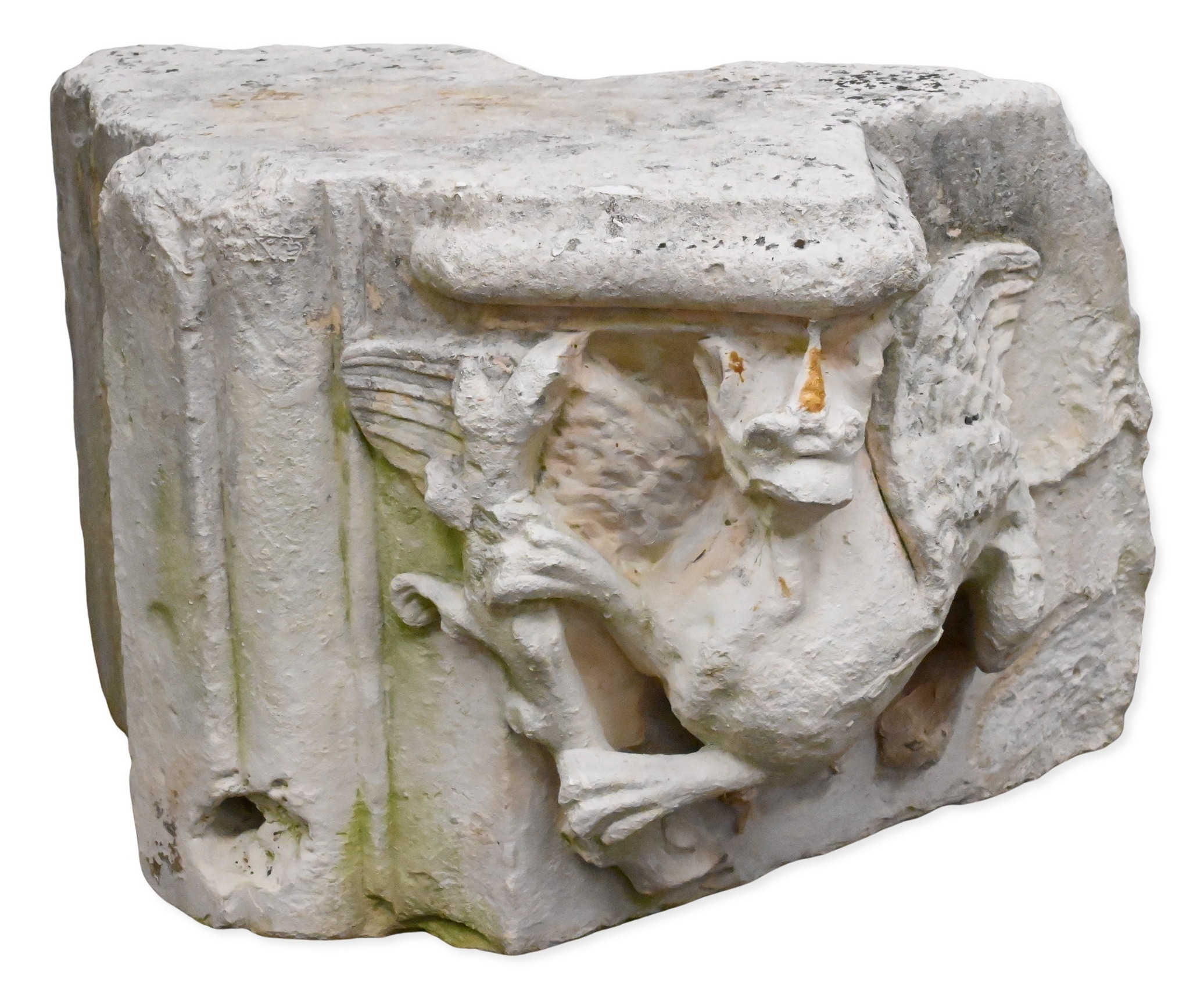
French Sandstone Corbel with a Winged Lion, 15th Century
A carved sandstone architectural corbel depicting a winged lion in vigorous profile, the creature shown crouching beneath a projecting molded capital. The lion’s wings are rendered with tightly scored feathering, and the surrounding architectural elements retain crisp Gothic detailing. The sculptural block embodies the animated bestiary imagery favored throughout late-medieval French ecclesiastical architecture.
13 inches, 17 inches 22 inches
Provenance: Sothebys, New York, Lot 128
Property of the Philadelphia Museum of Art sold to benefit the Acquisitions fund
Purchased with Philadelphia Museum funds from the George Grey Barnard Collection, 1945
Literature: Martin Weinberger, The George Grey Barnard Collection, New York, 1941, no. 92, pl. XXVII;
Joan A. Holladay and Susan L. Ward, Gothic Sculpture in America, vol. III, The International Center for Medieval Art, New York, 2016, p. 445.
Fantastic beasts appeared in architecture throughout the Middle Ages. The present sculpture would have supported a statue or the springing of a vault, and it has been suggested that this piece may have served an heraldic function in a family chapel (Gothic Sculpture, op. cit., p. 445).
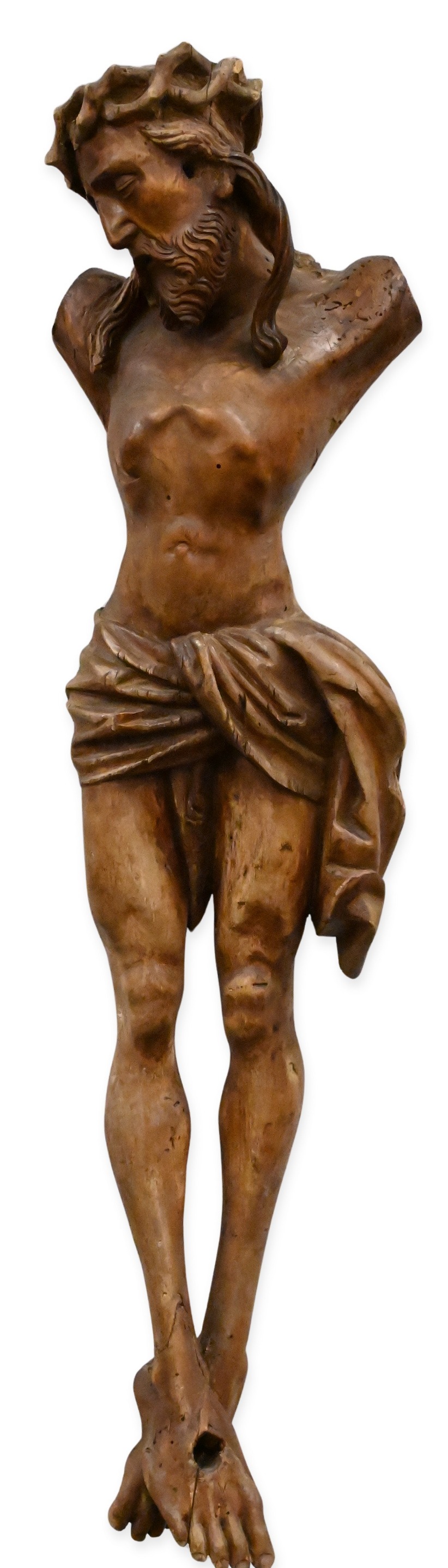
South German Linden Wood Figure of Christ Crucified, Early 16th Century
A finely carved late Gothic linden wood Corpus figure of Christ, His thorn-crowned head inclined to the left. The emaciated torso is rendered with sharply defined ribs and abdomen, the lower body draped in a deeply folded perizomium. The legs are crossed at the ankles. This figure was originally part of a larger crucifix group
height 33 1/2 inches
Provenance: Sotheby’s, New York, 1/12/1991, Sale 6130, Lot 20 ($5,000)
Mathias Komor, art dealer in New York City from the 1930s until his death in 1984
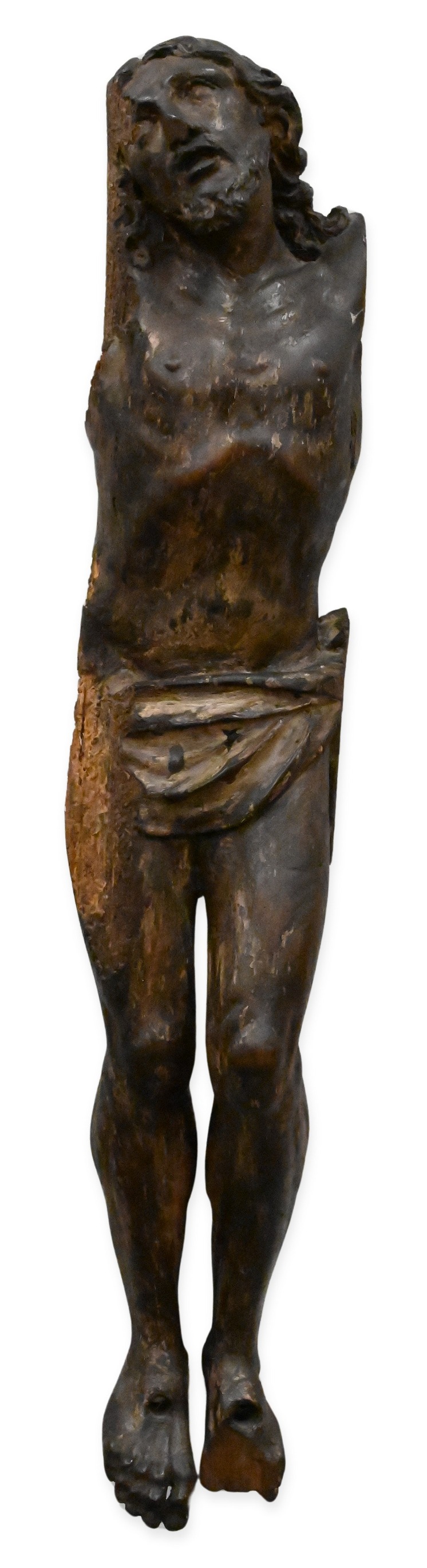
German Gothic “Corpus Christi” Wood Carving Fragment, 15th Century
A fragmentary Gothic carved wood Corpus Christi figure, the attenuated body rendered with a pronounced ribcage, narrow waist, and elongated legs typical of late medieval German crucifixion sculpture. Traces of original polychrome remain beneath a later darkened devotional surface. Formerly part of a larger crucifix group; now lacking the head, arms, and portions of the feet
height 23 inches
Provenance: Thomaston Place Auction Galleries, Maine, 2/15/2008, Lot 152 ($1,600)
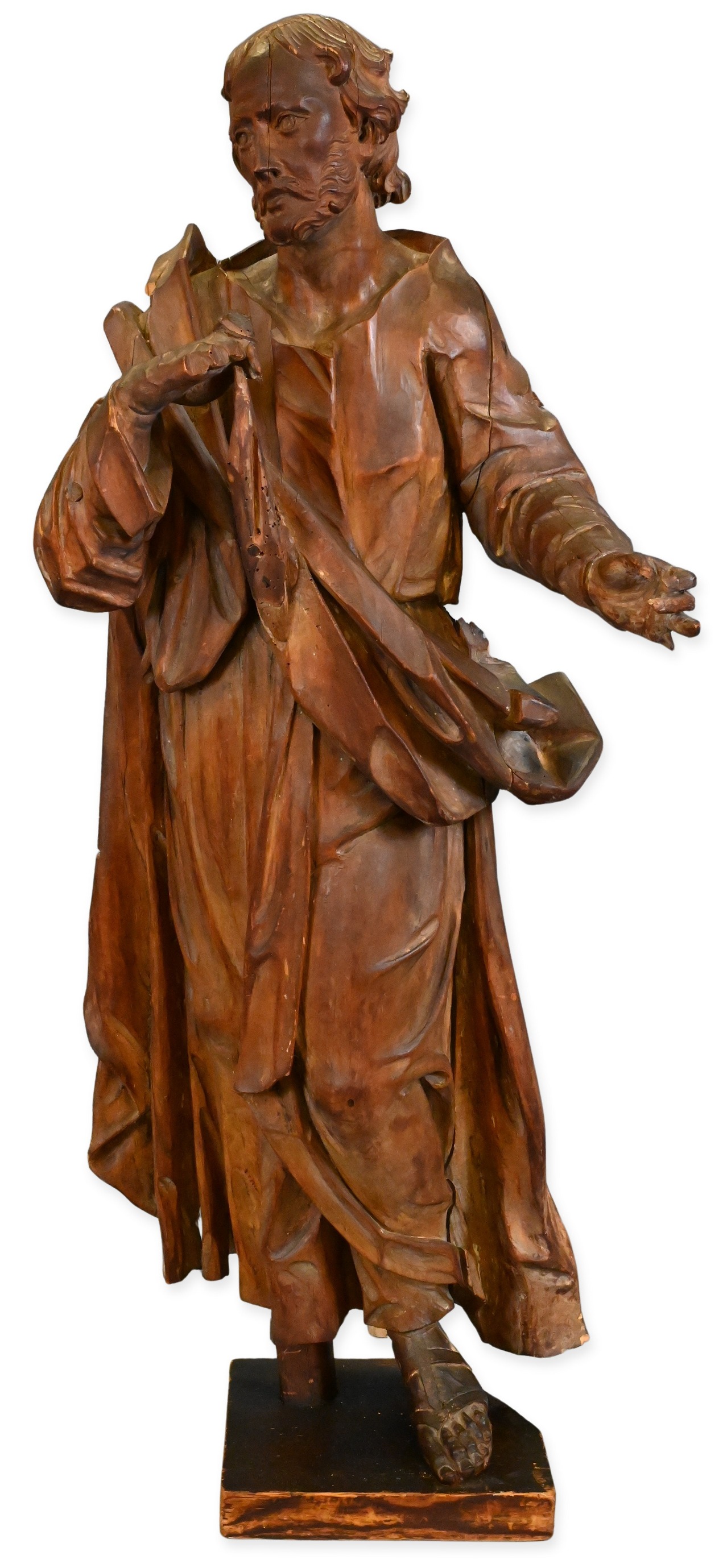
Attributed to Tilman Riemenschneider (German circa 1460-1531)
“Carved Walnut Figure of Christ the Redeemer”
A carved walnut Renaissance figure of Christ the Redeemer, shown standing with outstretched right arm and the left arm drawn slightly inward, his body turned gently at the waist and draped in deeply carved, naturalistic folds characteristic of the Franconian school. The figure displays a sensitively modeled face with downcast eyes and flowing hair, and retains an unpainted, warm walnut surface typical of early 16th-century South German sculpture.
height 47 inches
Provenance: Thomaston Place Auction Galleries, Maine, 11/13/2020, Lot 1346 ($5,557)
German Carved Oak Figure of a Nun, 18th Century
A carved oak standing figure of a nun, depicted wearing a full habit with deeply folded drapery and holding a Bible in her left hand. The figure retains a rich, naturally aged surface with warm patination. Rendered with simplified facial features and elongated vertical proportions typical of devotional sculpture of the period
height 35 inches
Provenance: Phillips Auction, New York, Sale NY830, Lot 134
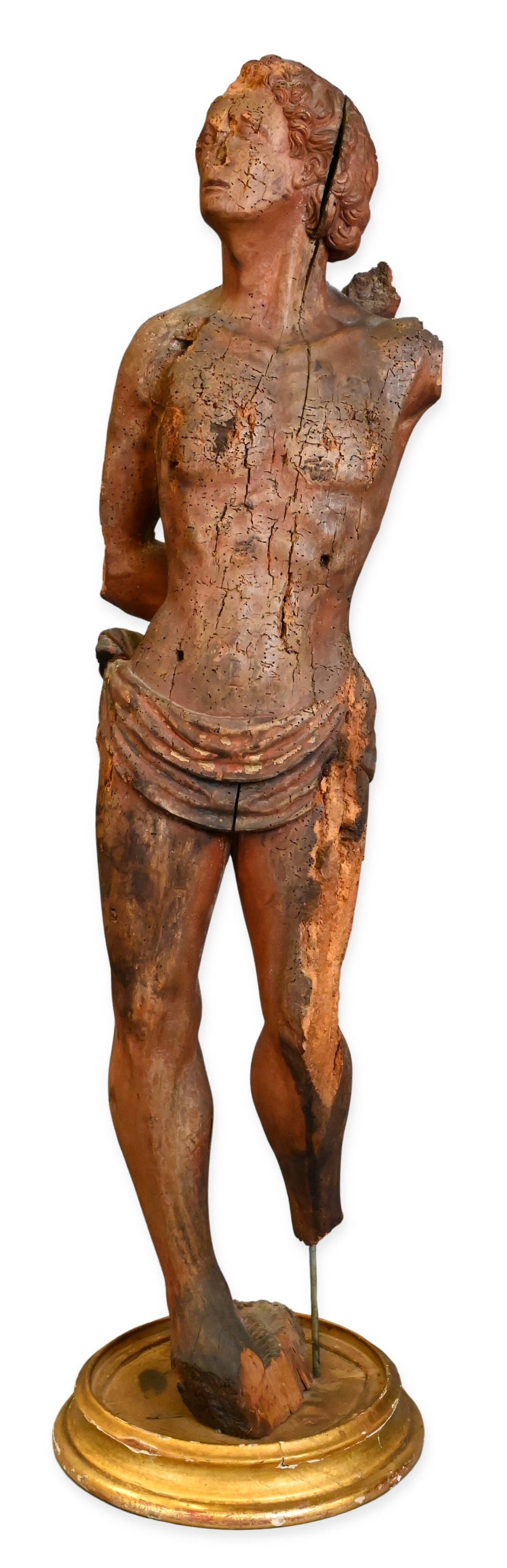
School of Tilman Riemenschneider (German circa 1460-1531)
“Saint Sebastian”
Carved limewood figure of Saint Sebastian, shown bound with hands behind his back, wearing a carved draped loincloth. The figure retains areas of original polychrome with later traces and extensive craquelure
Height 43 inches
Provenance: Purchased from Clare Reed Antiques, Nyack, New York ($2,000)
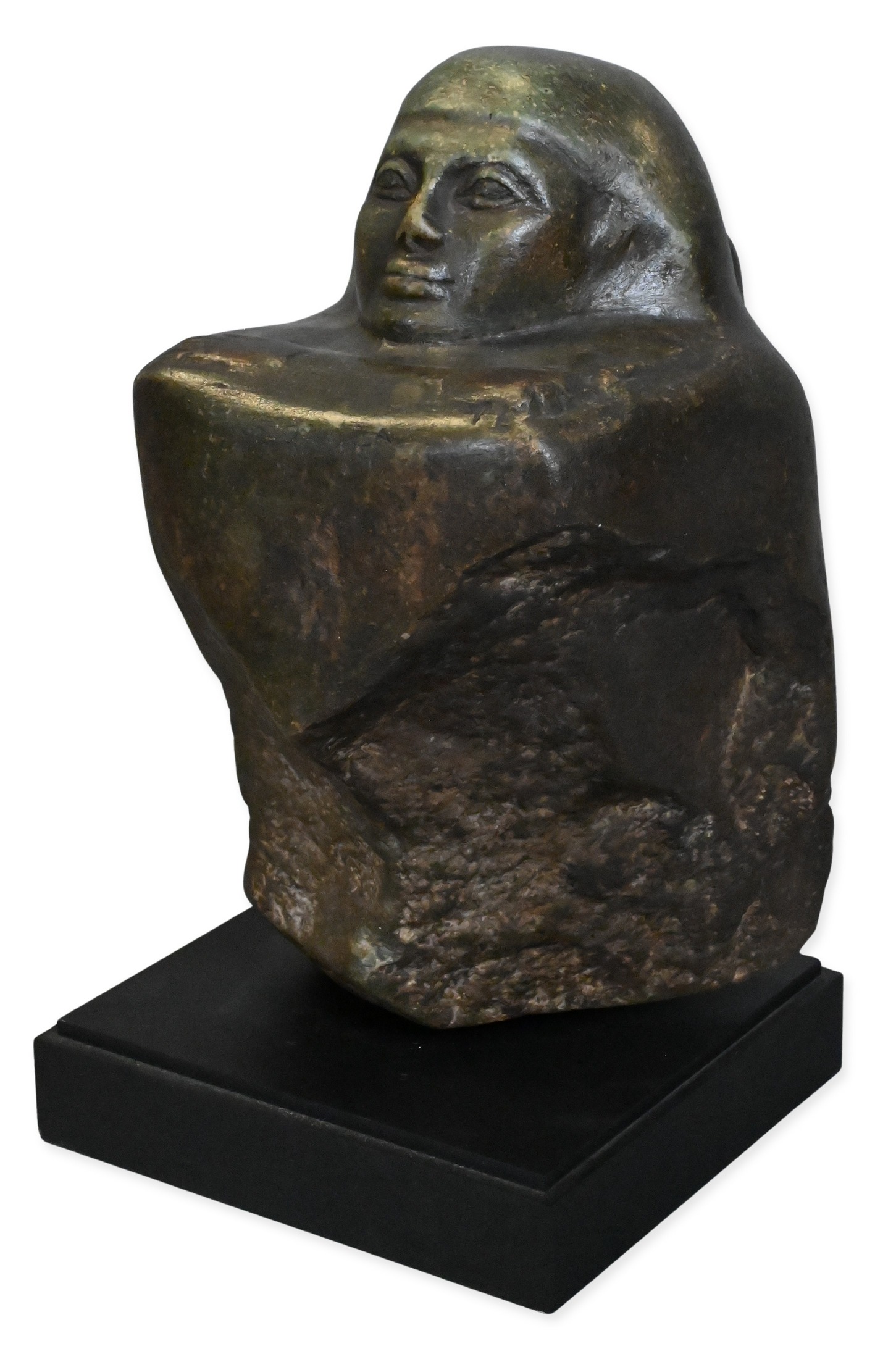
Egyptian Stone Block Statue Fragment (Possibly New Kingdom to Late Period circa 1550-300 B.C.)
carved dark green-black stone fragment from a classic Egyptian block statue, the elite sculptural form in which the subject’s cloaked body is rendered as a compact cubic mass with the head emerging above, the serene, idealized face is carved with almond-shaped eyes and a smooth headdress, and the back pillar bears a vertical band of hieroglyphs preserving portions of a traditional ḥtp-dỉ-nsw (“an offering which the king gives”) formula, block statues such as this were placed in temples to serve as eternal devotional presences for high officials, and often carried prayers and invocations for offerings on behalf of the deceased, carved from a dense, dark stone—likely granodiorite or greywacke—characteristic of New Kingdom and Late Period temple sculpture, inscribed with a vertical column of hieroglyphs on the back pillar
height 11 inches
Provenance: Property from a Prominent New York City Collector
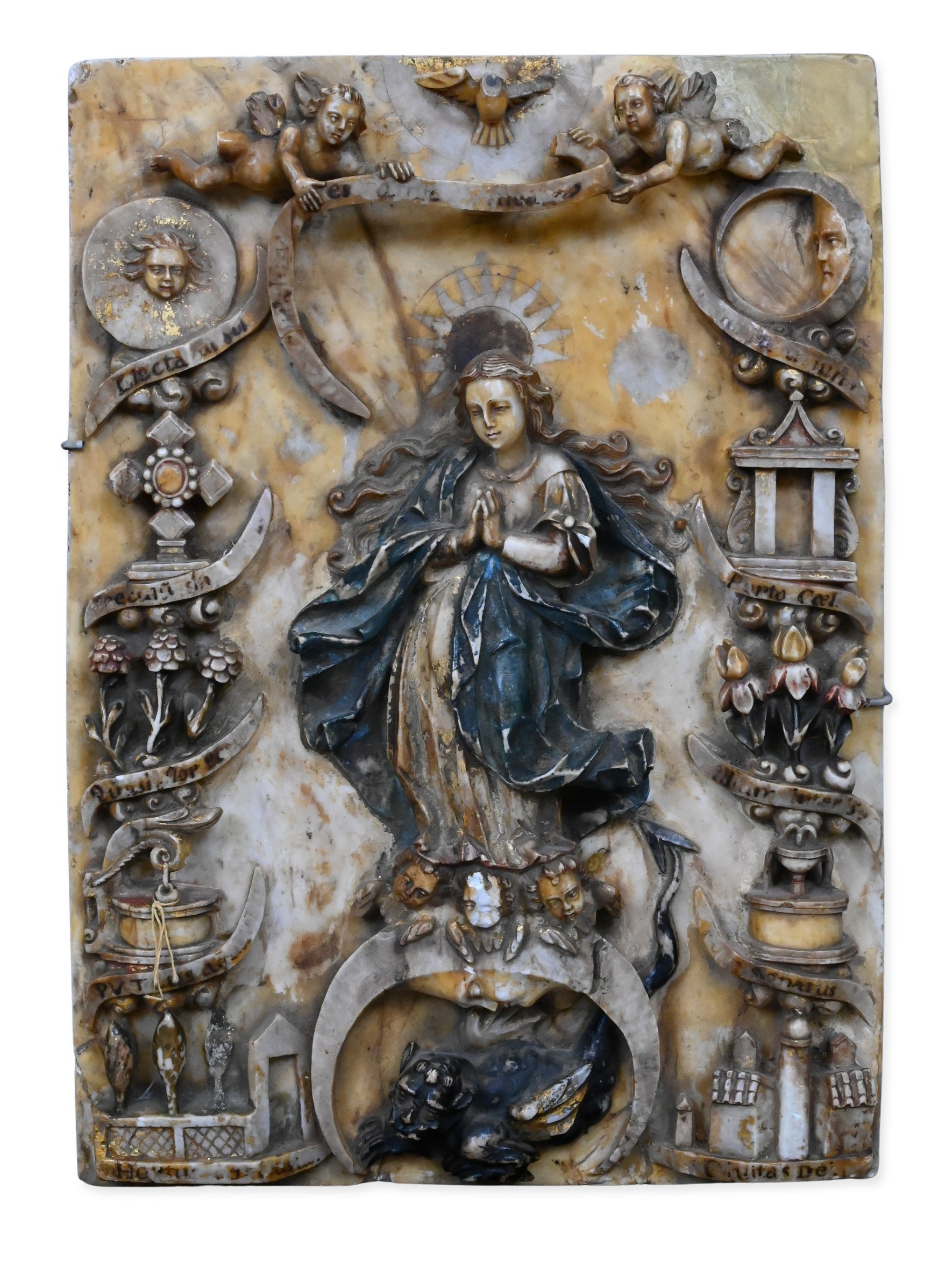
Polychromed Alabaster Relief of the Madonna of the Immaculate Conception
A finely carved and richly polychromed alabaster relief depicting the Madonna of the Immaculate Conception, shown standing upon a crescent moon and crushing the serpent beneath her feet—an iconography drawn from the Book of Revelation. The Virgin is surrounded by cherubs and swirling celestial motifs, with sunburst medallions, cloud forms, and ornate symbolic devices framing the composition. Executed in high relief with layered polychromy and traces of original gilding, typical of Spanish Colonial devotional panels.
14″ x 10″
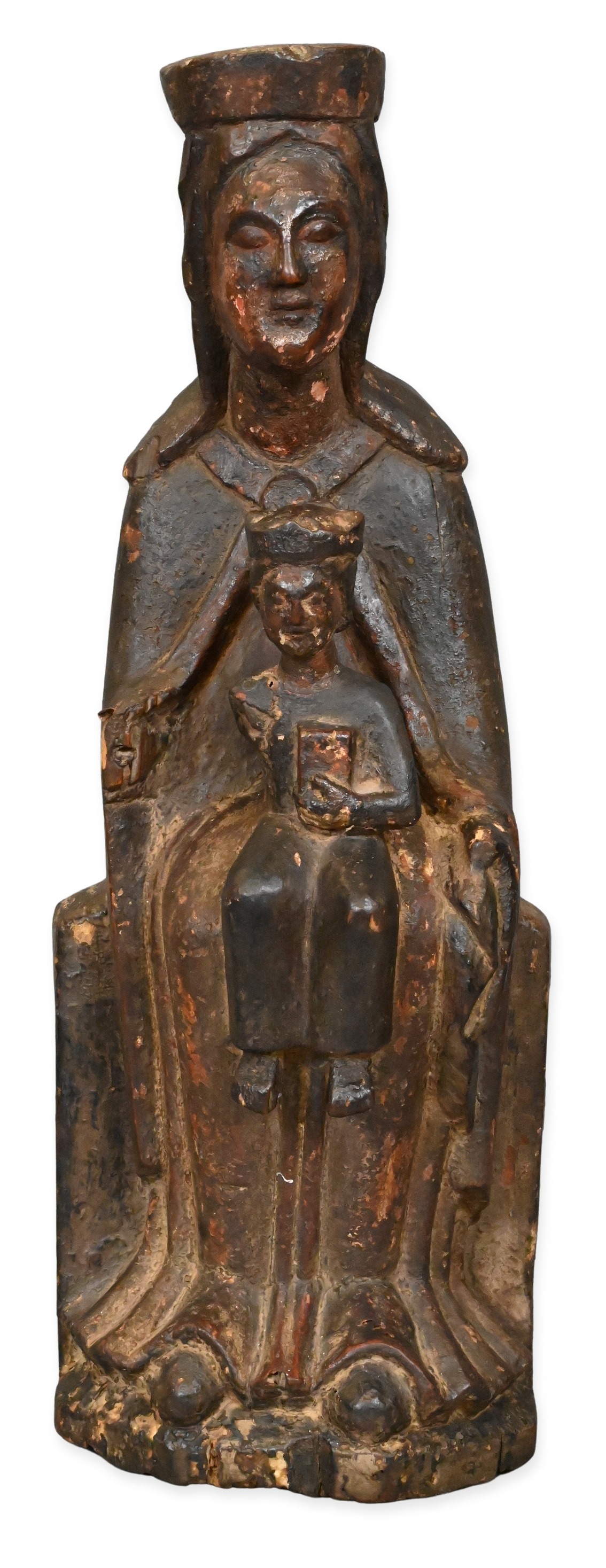
Carved and Polychrome Wooden Figure of the Madonna and Child, 12th Century
A carved and polychrome wooden figure of the enthroned Virgin and Child, executed in the Romanesque French style. The Virgin is shown seated frontally, crowned and draped in long robes, with the Christ Child positioned centrally upon her lap. The composition follows the rigid, iconic symmetry of 12th-century Marian sculpture. Traces of original and later polychromy are visible across the surface.
height 24 inches
Provenance: Sotheby’s, New York, Sale 5717, 5/20/1988, Lot 4 ($3,300)
Pornic, Lower Brittany. Illustrated in the “International Studio”, October, 1927
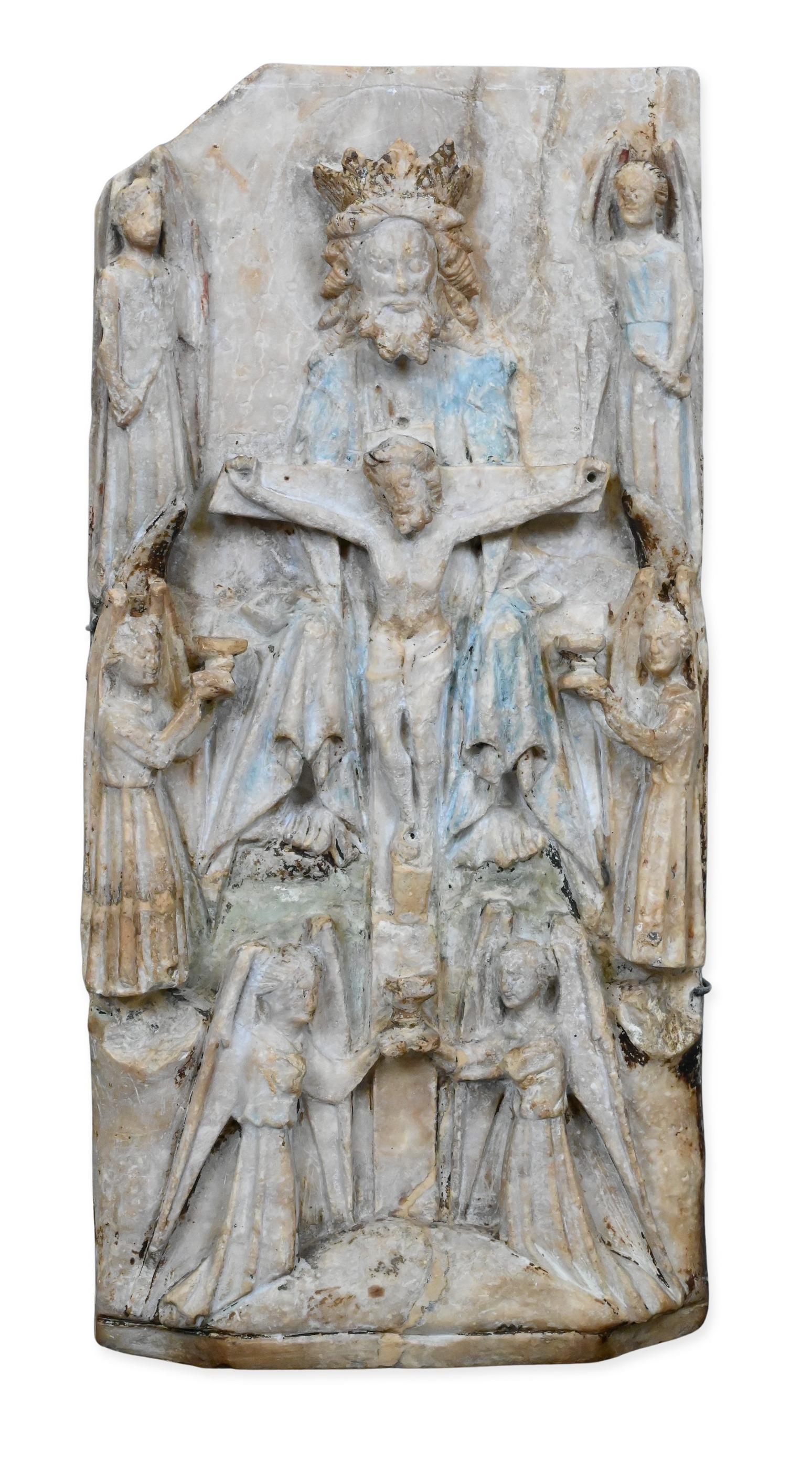
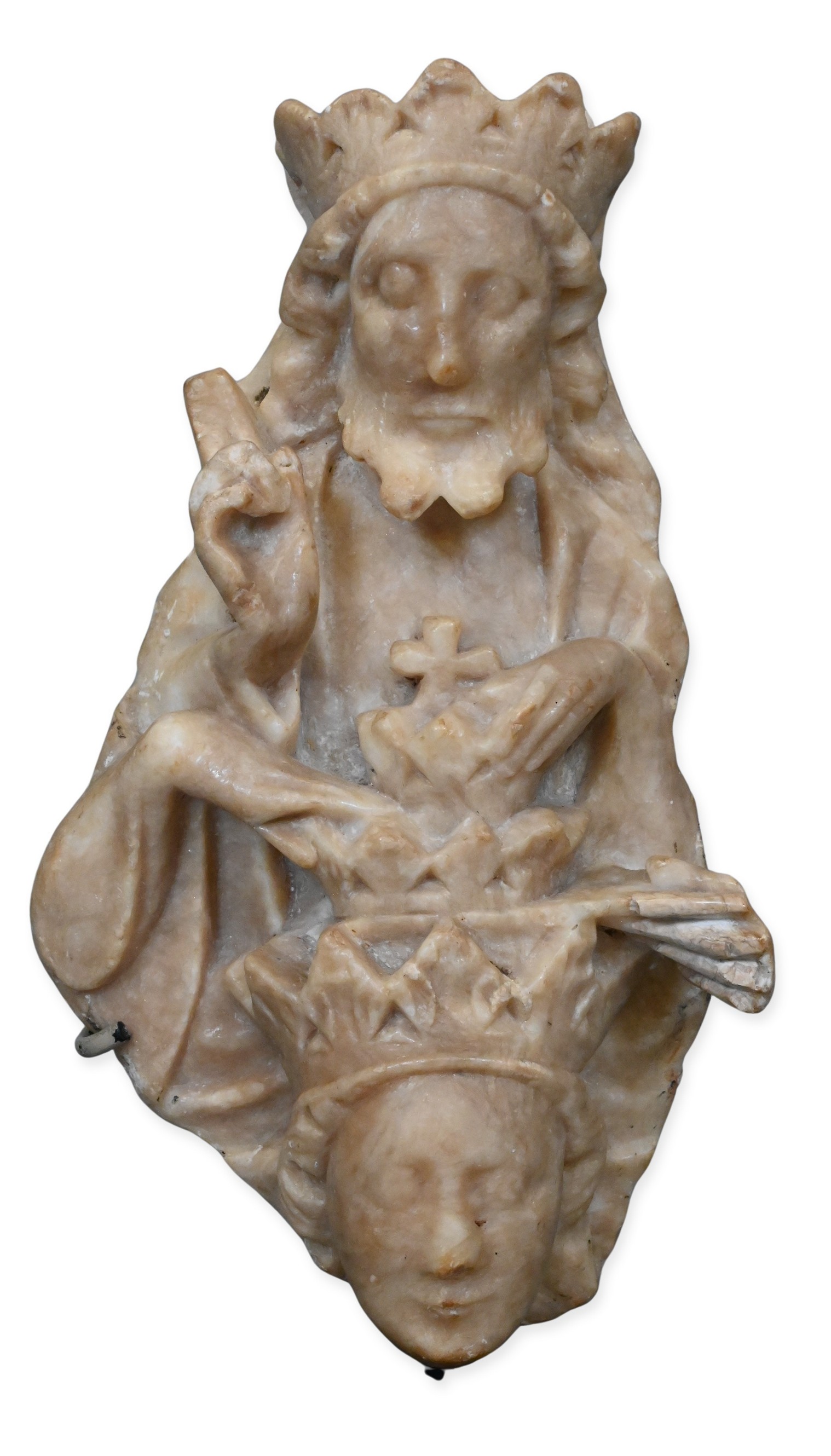
Nottingham Alabaster Relief of the Holy Trinity, English 15th Century
A finely carved English alabaster relief depicting the Holy Trinity, centered by God the Father enthroned and supporting the Crucified Christ, flanked by attendant angels in adoration. The composition is characteristic of the Nottingham workshops, with elongated figures, stylized drapery, and a tiered narrative arrangement. The panel retains traces of original pigment within the carved recesses.
21″ x 10″
Provenance: Mary Blair, Chicago
French & Company, New York
Acquired by the most recent owner from French & Company in 1964
Sotheby’s, Lot 256
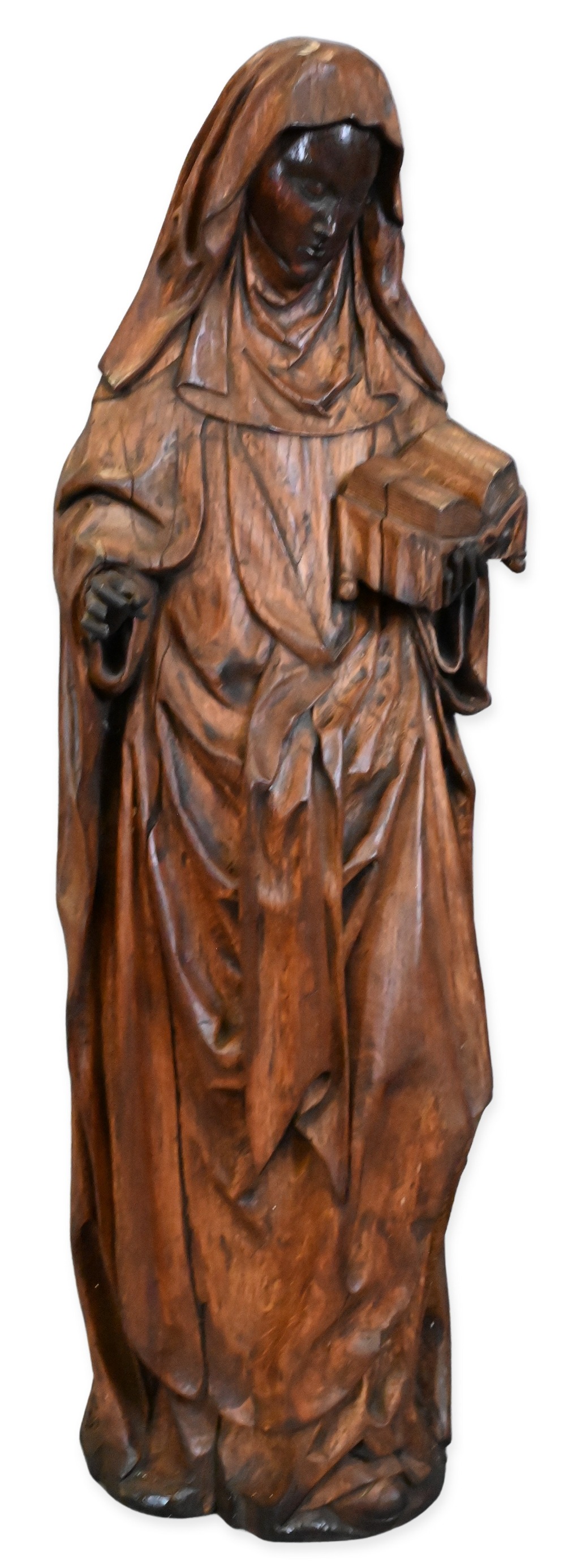
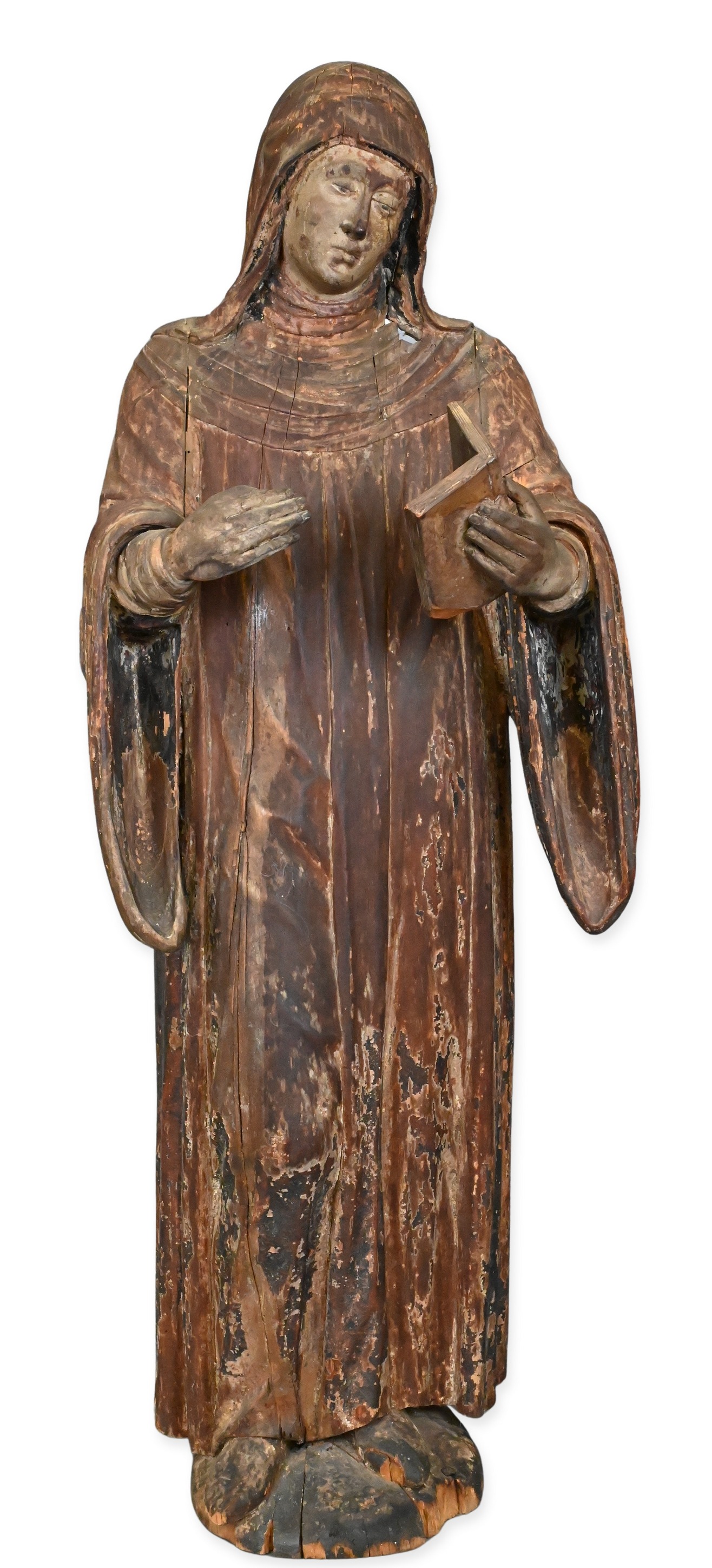
German Linden Wood Figure of Saint Elizabeth, 16th Century
A carved linden wood standing figure of Saint Elizabeth, depicted holding an open book in her left hand and wearing a long, flowing mantle with deeply folded drapery. The carving displays the characteristic soft modeling and elongated proportions of South German late Renaissance devotional sculpture.
height 42 inches
Provenance: Sotheby’s, New York, Lot 53
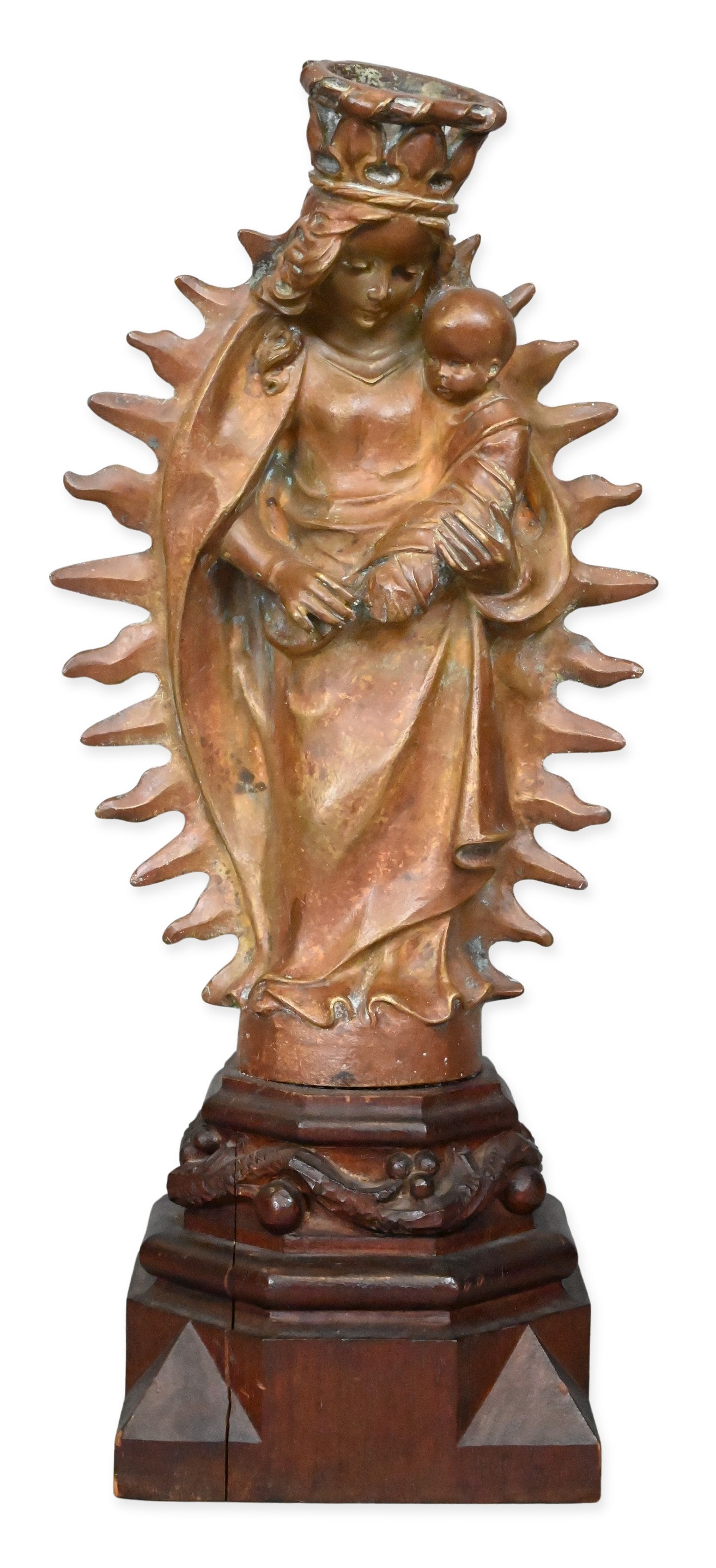
German Bronze Figure of the Crowned Virgin and Child, 19th Century or earlier
A finely cast bronze figure of the crowned Virgin holding the Christ Child, both standing before a dramatic radiating aureole of flame-form spikes. The Virgin is rendered in traditional Gothic revival manner, with flowing robes, a domed crown, and serene facial expression. The figure is mounted on a carved wooden Gothic-form base
height 13 inches
Provenance: Thomaston Place Auction Galleries, Maine, 6/1/2014, Lot 177 ($2,738)
Nottingham Alabaster Fragment of the Coronation of the Virgin, English Early 15th Century
A finely carved alabaster fragment depicting the Coronation of the Virgin, showing God the Father holding a triple crown above the head of the Madonna. The figures are rendered with characteristic Nottingham School traits—rounded facial features, deeply incised drapery, and a compact vertical composition. Surviving traces of original pigment remain in recesses. Mounted for display.
height 8 inches
Provenance: Sotheby’s, London, 4/21/1988, Lot 33 ($3,010)
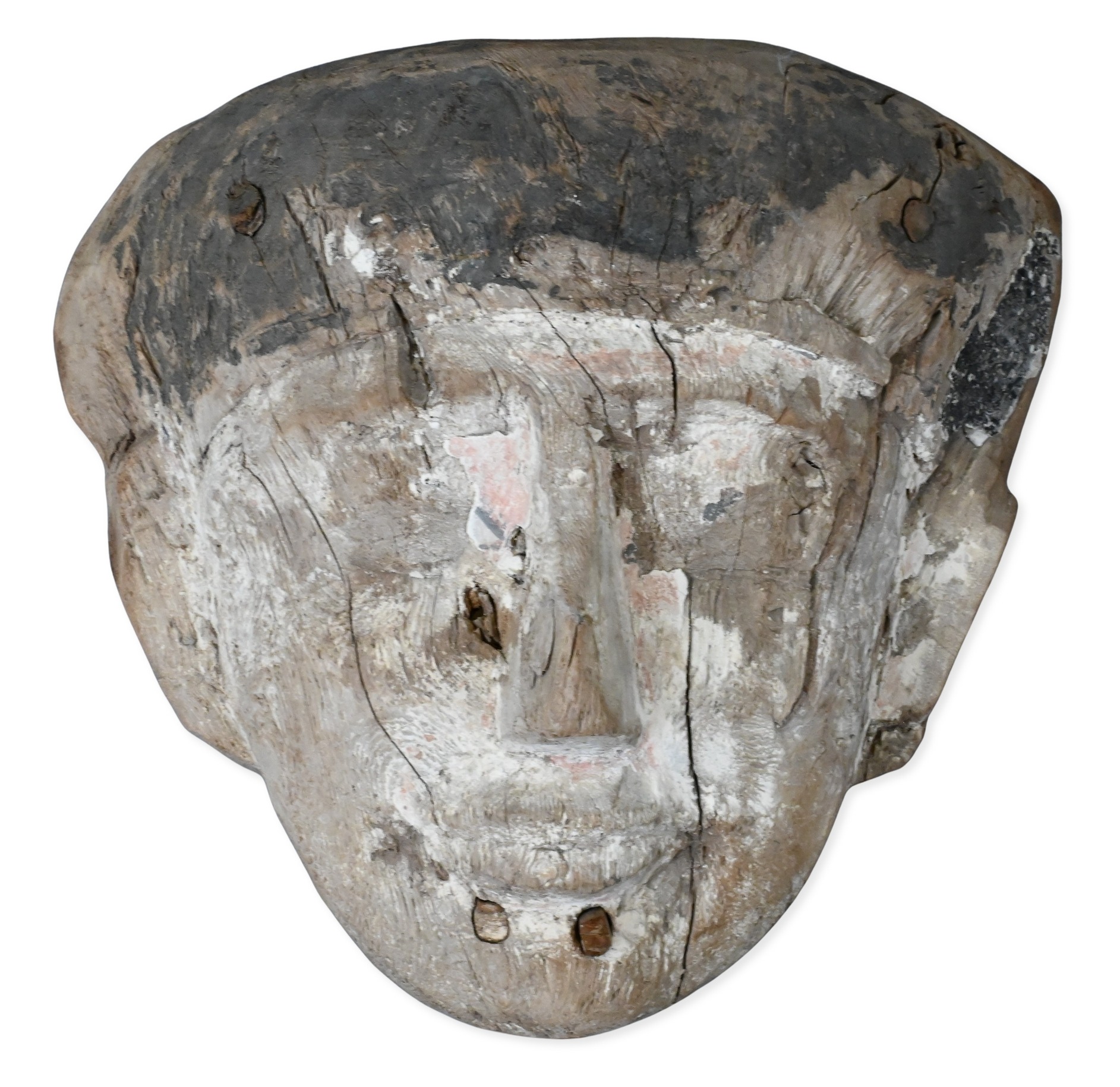
Egyptian Wood Mummy Mask
carved wooden funerary mask with broad brow, long wedge-shaped nose, and gently modeled features, retaining traces of original pigment including black detailing on a pink ground around the eyes, weathered surface with encrustations and age-related losses appropriate to burial conditions, carved wood with pigment traces, unmarked, late period circa 712-30 B.C.
height 11 inches
Provenance: Property from a Prominent New York City Collector
Sotheby’s Sale #5640, 11/24/1987, Lot 292.
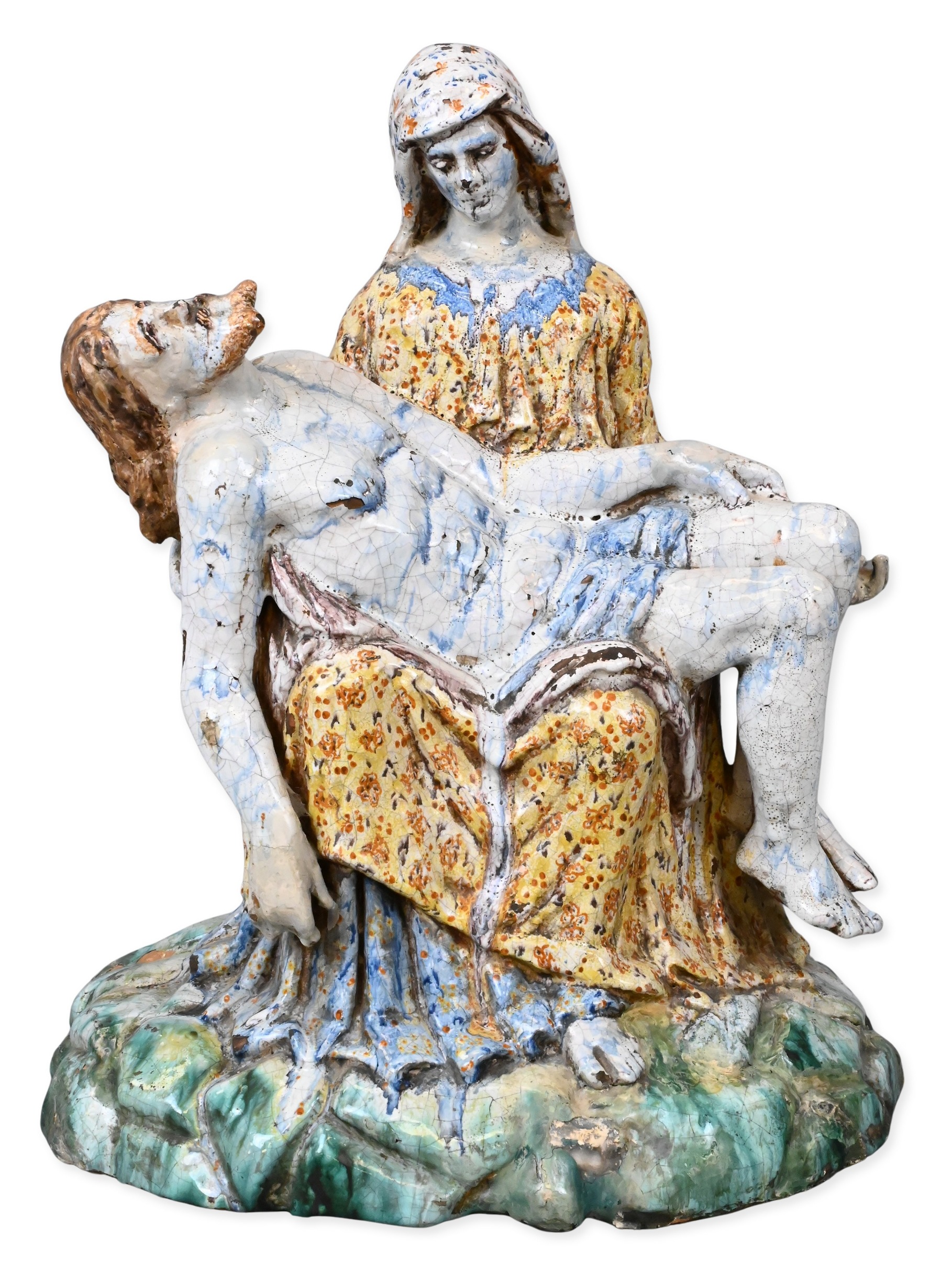
Spanish Majolica Pietà, Probably 17th Century
A hand-modeled majolica Pietà, depicting the Virgin Mary seated and holding the body of Christ across her lap. Decorated in polychrome glazes with craquelure and mottled surface typical of early majolica devotional sculpture. Raised on an integral rocky base; the underside with open, ribbed support cavities consistent with period construction methods
height 18 1/2 inches
Provenance: Sotheby’s sale 5/10/1985 lot 149 ($522)
Property of the North Carolina Museum of Art
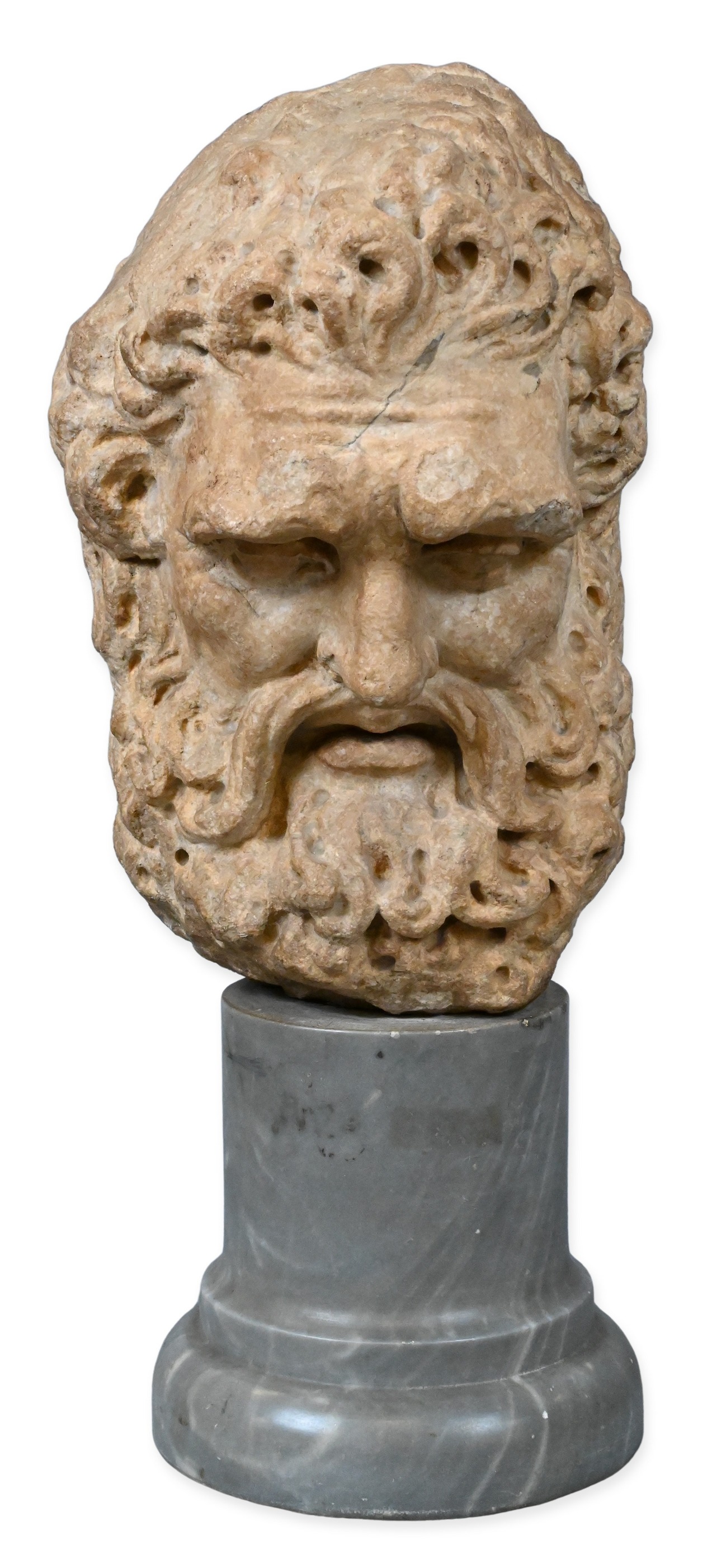
Carved Marble Head of a Bearded Man “Farnese Hercules” Type
expressive carved marble head depicting a heavily bearded male figure in the manner of Roman monumental sculpture, with a deeply furrowed brow, prominent features, and thick curling beard, carved at a later date in the classical Roman style, mounted on a turned gray marble plinth, European, in the Roman style, late 18th Century
height 12 inches, 17 3/4 inches overall
Provenance: Estate of Nina Silberstein, former CEO of David Webb
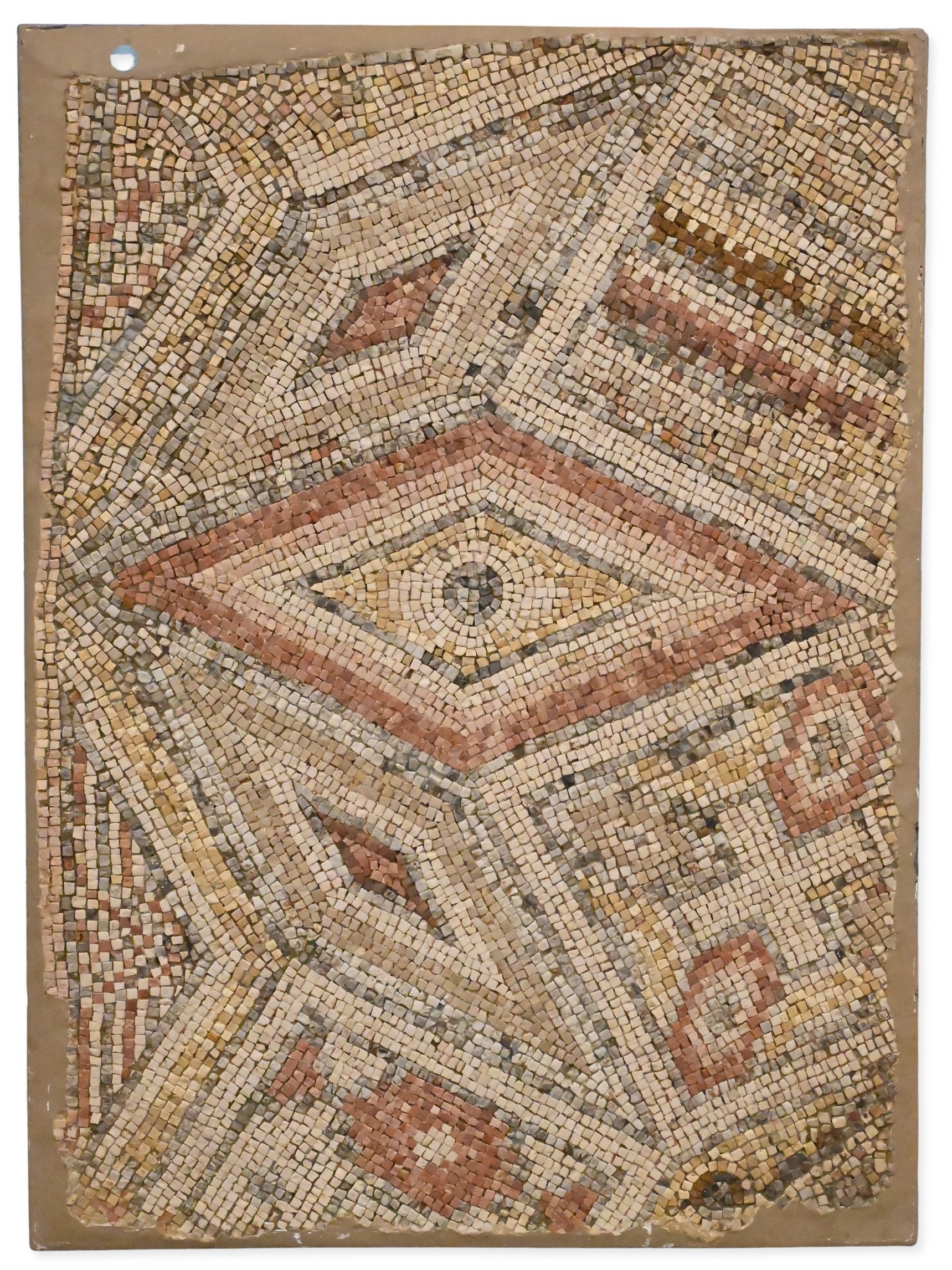
Roman Mosaic Panel, Circa 3rd/4th Century A.D.
A large Roman mosaic panel composed primarily of white, ochre, salmon pink, red, black, gray, and light blue tesserae. The design features a geometric arrangement including concentric lozenges, dentate bands, crosses, and parallel borders—likely part of a larger villa pavement. The tesserae survive with good surface integrity and strong coloration, typical of late Roman provincial workshop production.
55 1/2″ x 33 1/2″
Provenance: Merrin Gallery, New York, 1989
Sotheby’s, New York, 12/07/2001, Lot 133
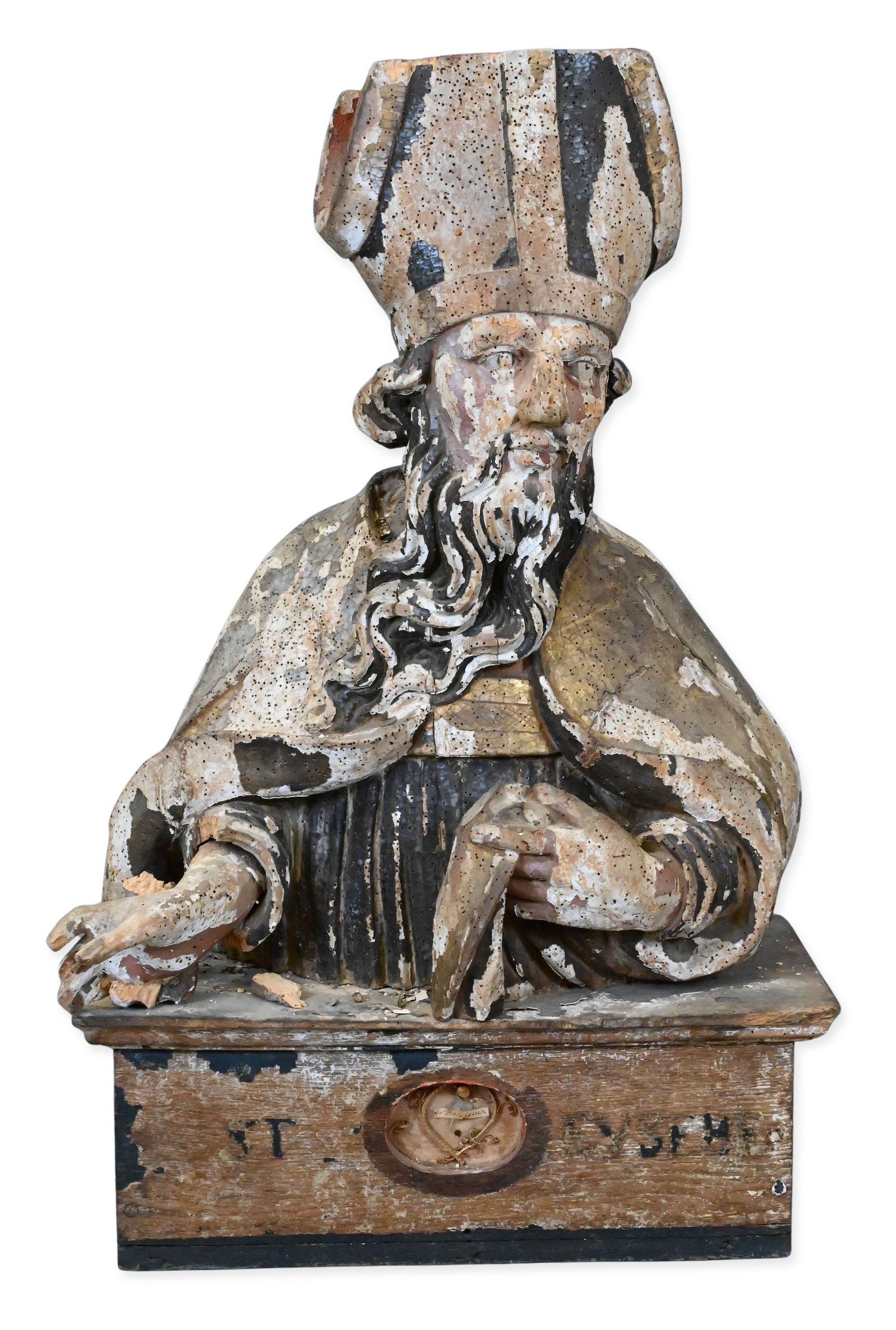
Polychrome Carved Wood Reliquary Bust of Saint Boniface, Continental 17th Century
carved as the mitred bust of Saint Boniface, depicted with flowing beard and draped vestments, executed in deep relief and retaining traces of its original polychrome and gilding. Set upon an integral rectangular reliquary base fitted with an oval, glass-fronted cavity housing curled gilt tendrils and a paper label inscribed “S. Bonifacio.”
height 32 inches, width 20 inches, depth 11 inches
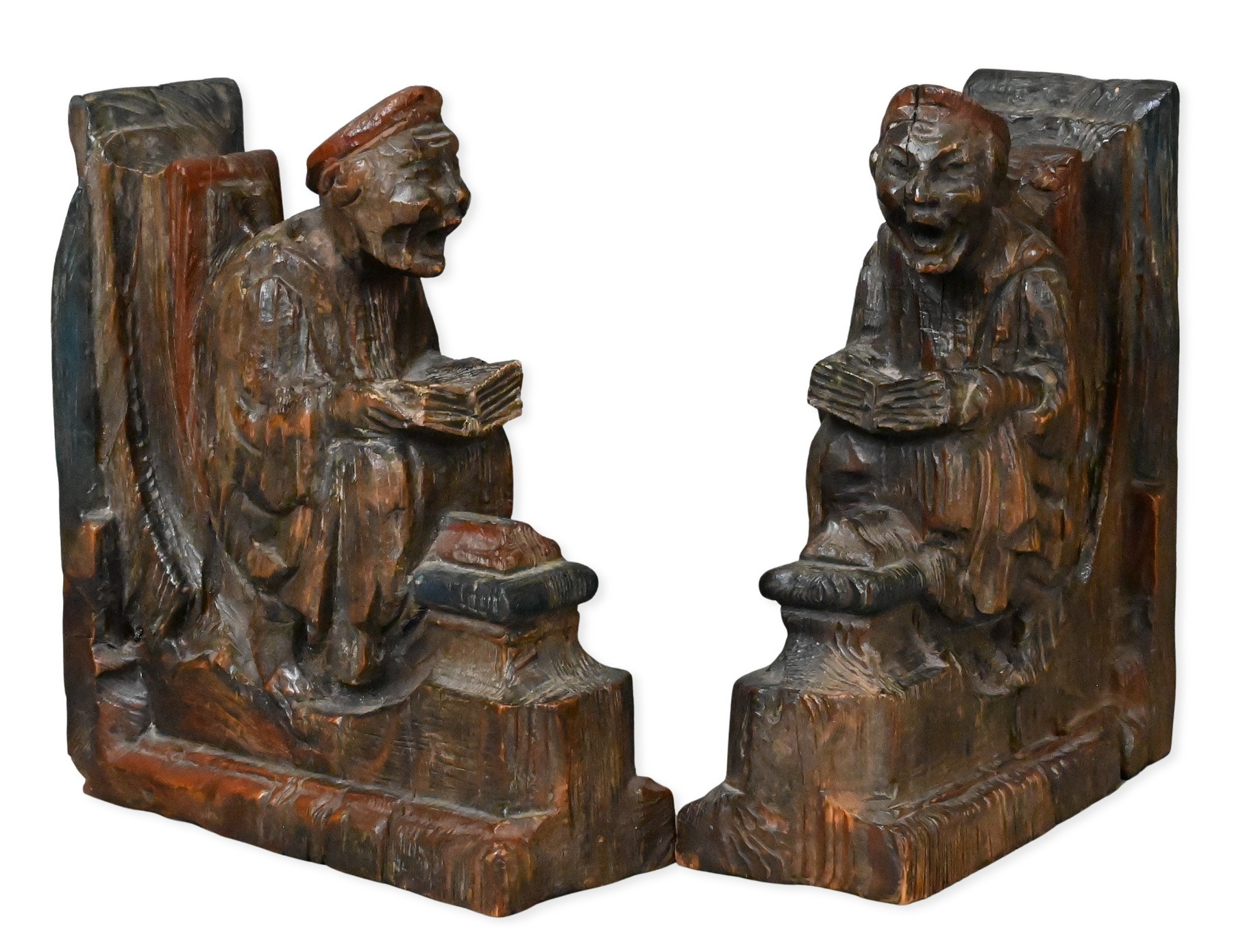
Pair of Polychrome Carved Softwood Scholar Brackets or Bookends
probably French, Mid-16th century
each carved as a seated scholar reading from an open book, with deeply cut drapery, expressive features, and architectural block bases retaining traces of original polychrome throughout, with expected surface wear consistent with age
height 9 1/2 inches
Provenance: Collection of Barbara Rothschild Michaels and Roger Michaels of New York City and Ossining, New York; many items passed through the family from the Estate of Herbert and Nannette Rothschild
Appraised by Sotheby’s 1/24/1994 ($1,500)
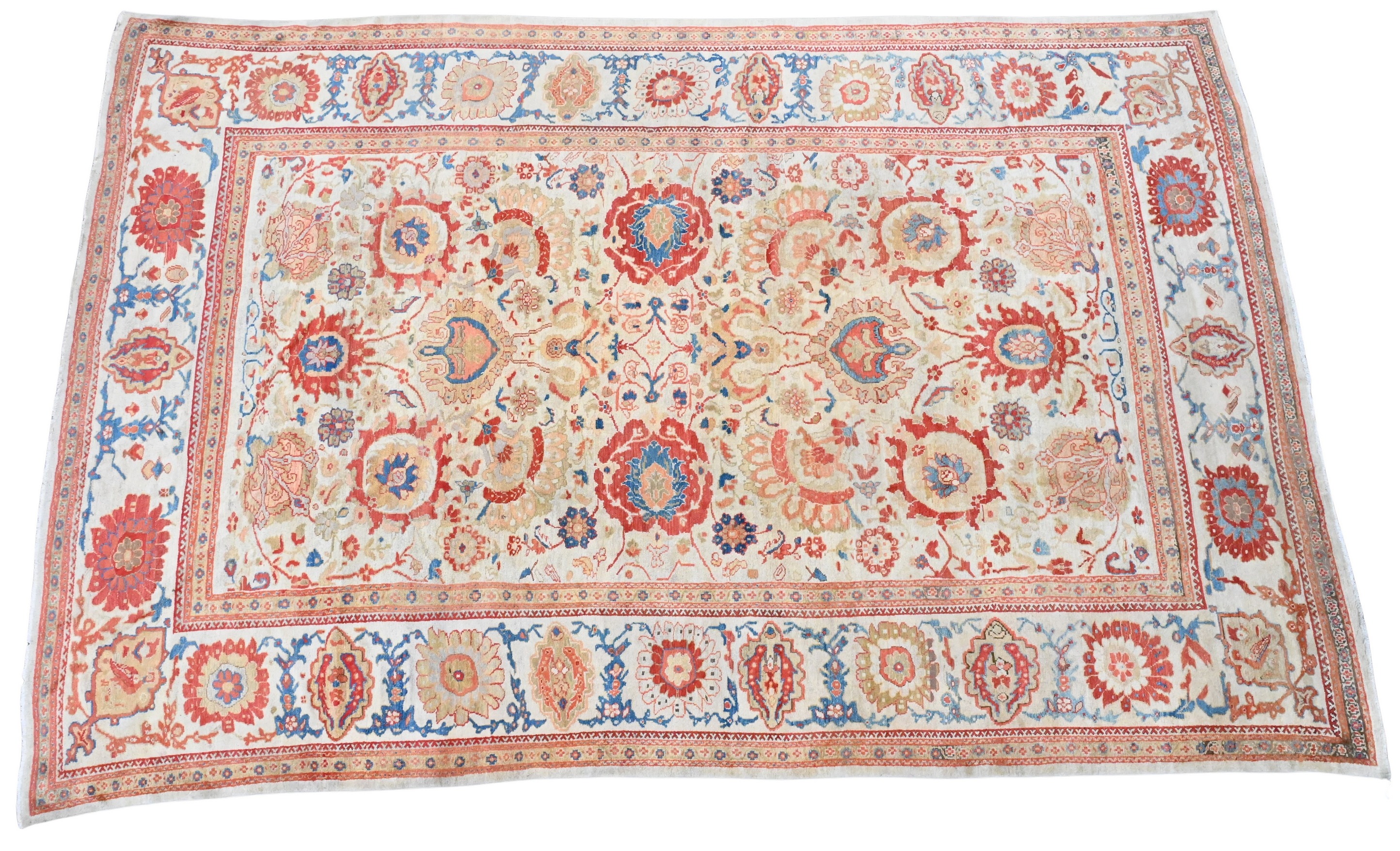
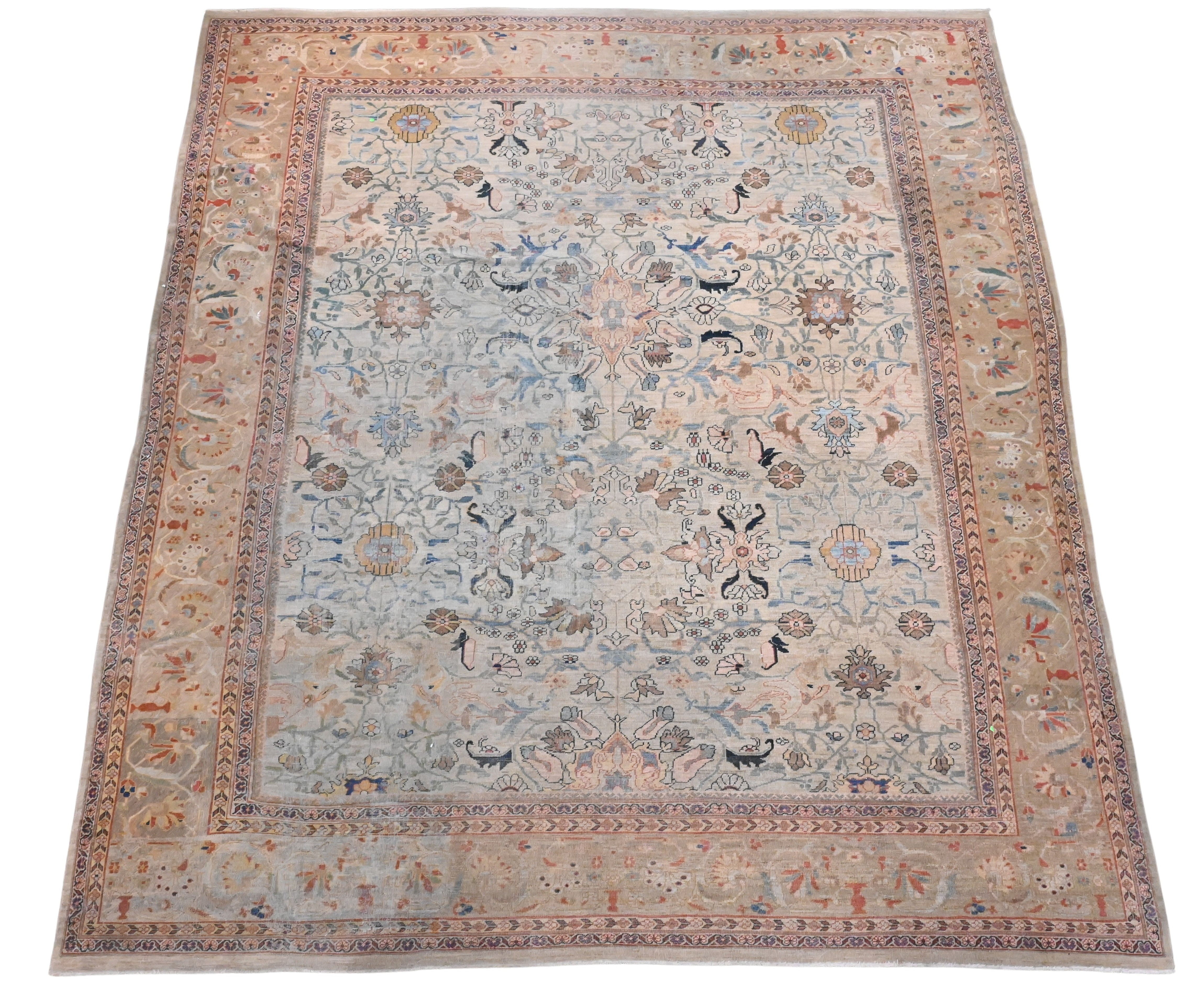
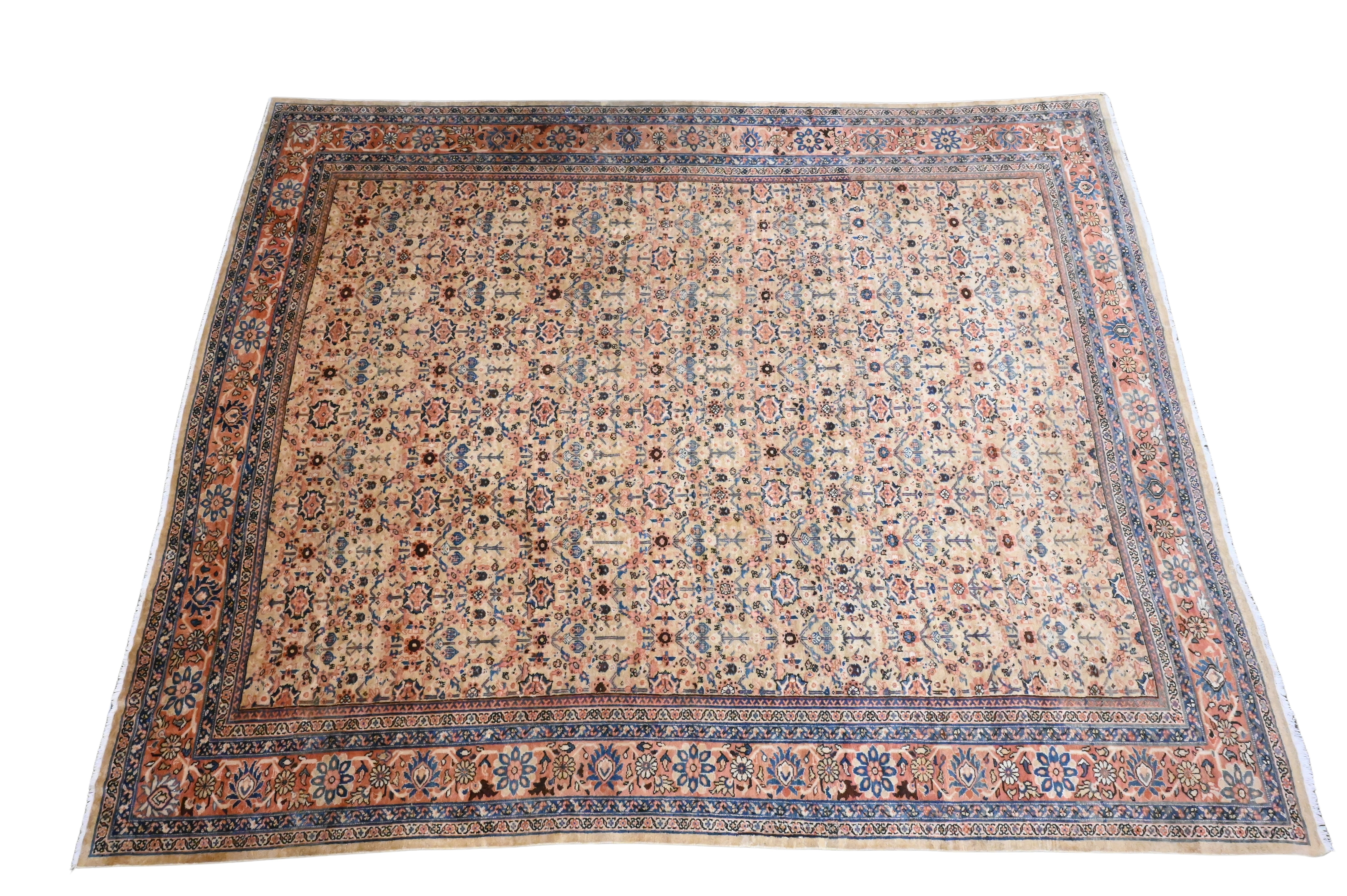
Sultanabad Carpet
finely hand woven Persian Sultanabad carpet, late 19th century, featuring an ivory ground with an allover pattern of stylized palmettes, rosettes, and serrated leaves in shades of brick red, soft blue, and tan, framed by a wide border of alternating floral motifs, late 19th century
11’9″ x 17′
Provenance: Property from a Private Collection at 791 Park Avenue Designed by Cullman & Kravis, Inc
Dildarian, Inc., 595 Madison Avenue, New York, February 10, 1989, purchase price $70,000, sale receipt available
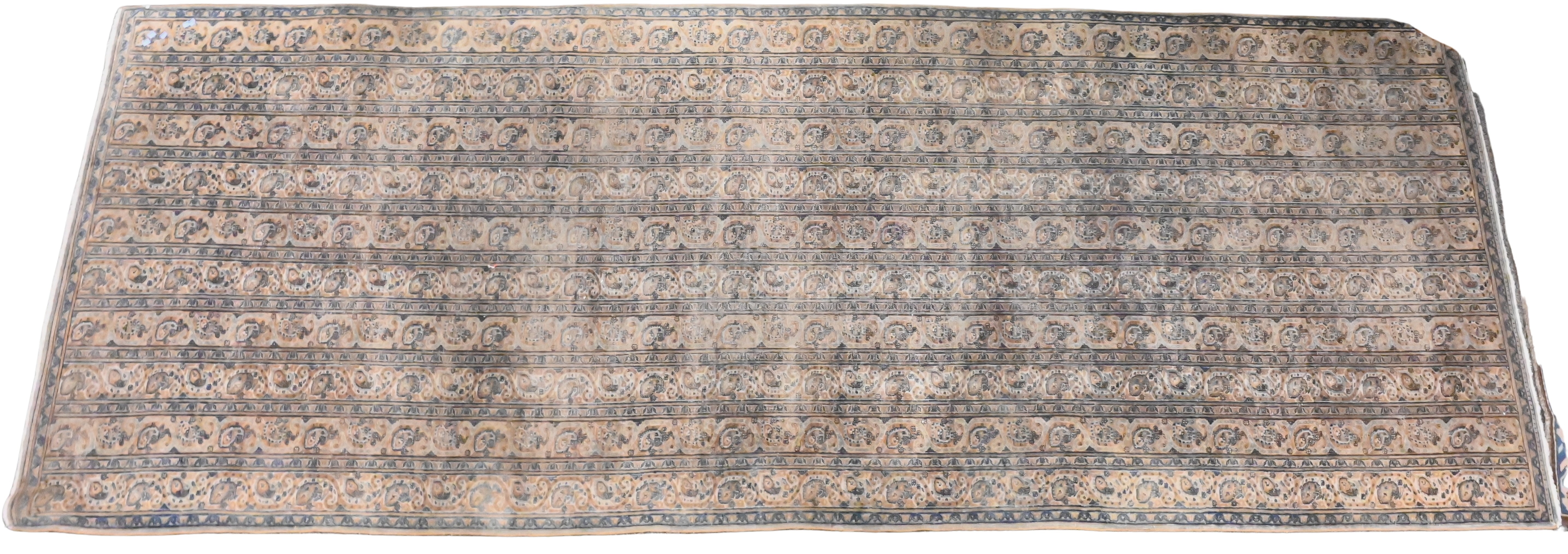
Persian Khorassan Gallery Carpet
featuring all over boteh (paisley) motif arranged in vertical columns in shades of rust, indigo, and ivory within multiple floral guard borders, circa 1900
4′ 10″ x 13′ 1″
Provenance: Beauvais Carpets, March 11, 2011, purchase price $30,000
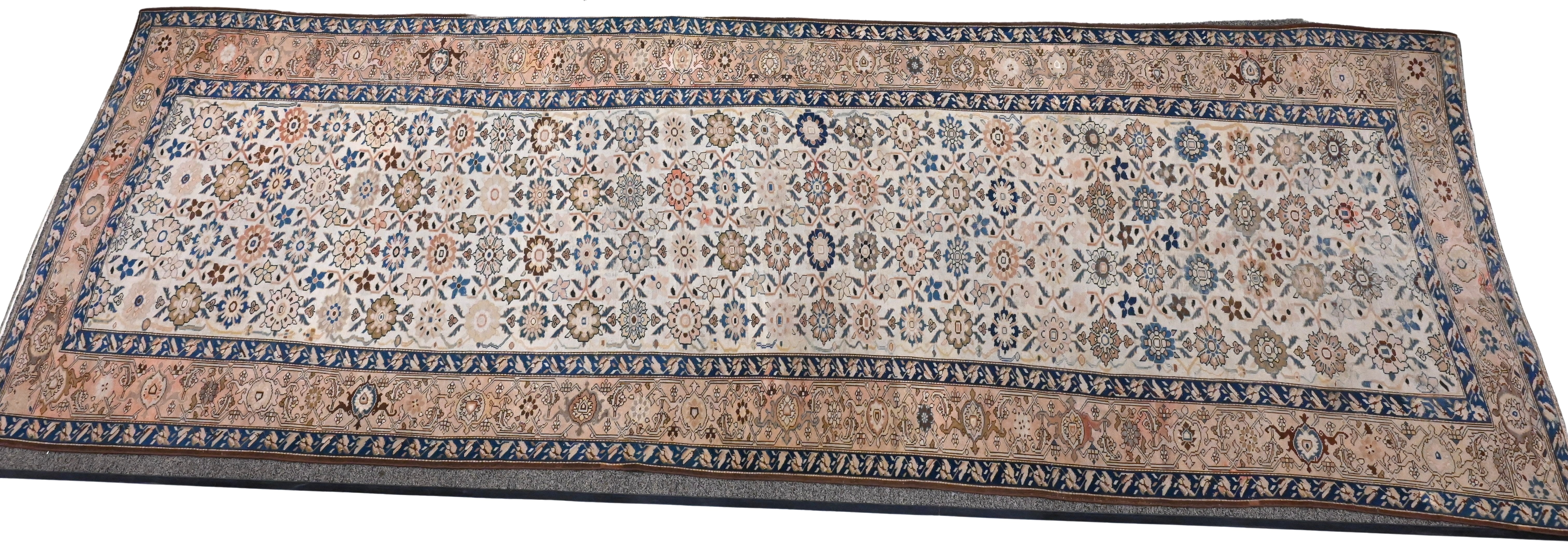
Persian Sultanabad (Mahal) Gallery Carpet
having allover floral and palmette design in shades of rust, soft blue, and ivory within multiple floral border, late 19th century
6′ 6″ x 19′ 4″
Provenance: A Collection from a New York City Townhouse Built by Stanford White, Interior Designed by Cullman and Kravis
Galerie Shabab, 03/11/2011 for $26,250, copy of sale receipt available
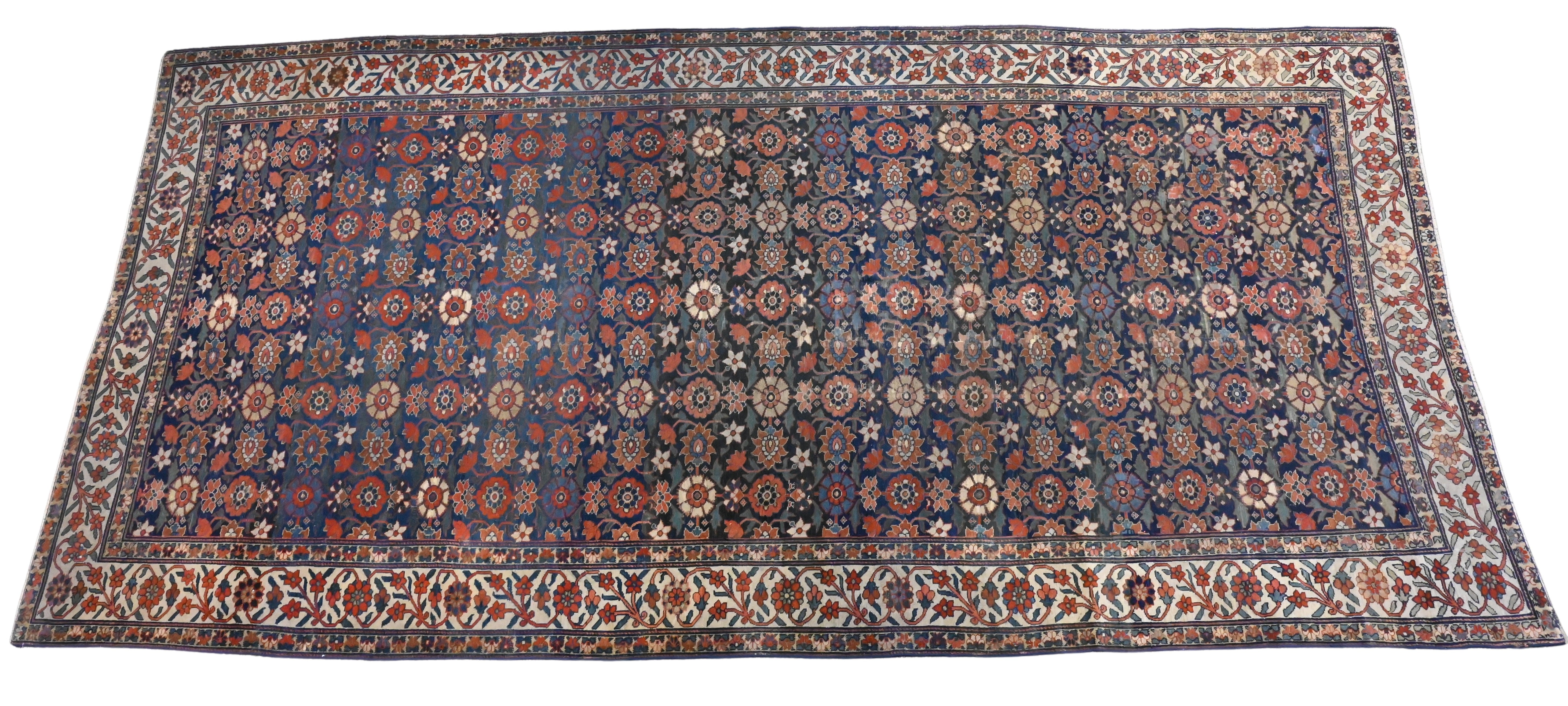
Feraghan Carpet
classic Feraghan carpet with an allover repeating rosette and stylized floral lattice on a deep blue field, framed by an ivory border of meandering vines and blossoms. Fine, tightly woven construction typical of late-19th-century Feraghan workshop production
Wool on cotton
Size: 6′ 10″ x 14′ 3″
Provenance: Property from a Private Collection at 791 Park Avenue Designed by Cullman & Kravis, Inc
Berdj Abadjian, New York, July 16, 1990, valuation price: $25,000, valuation available
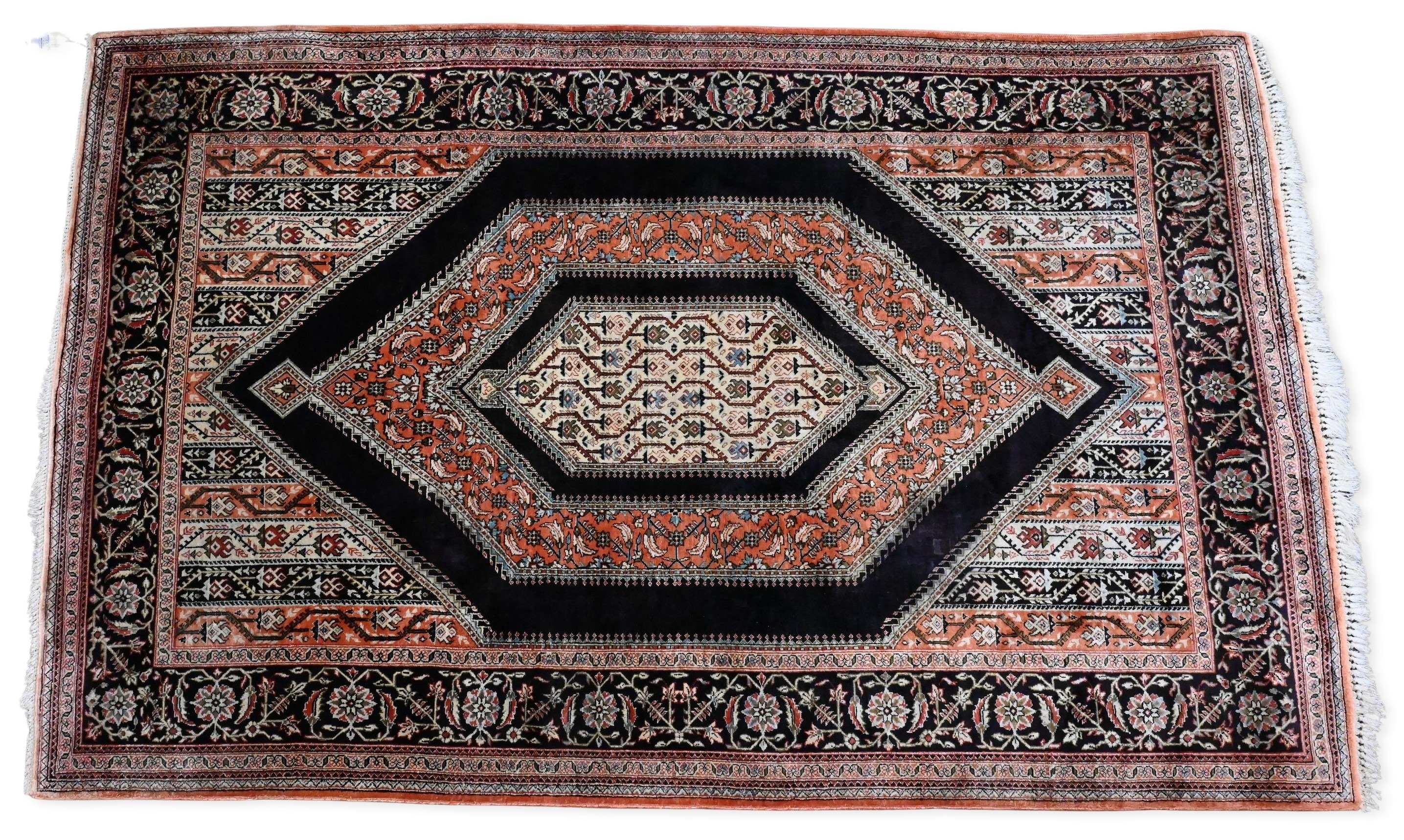
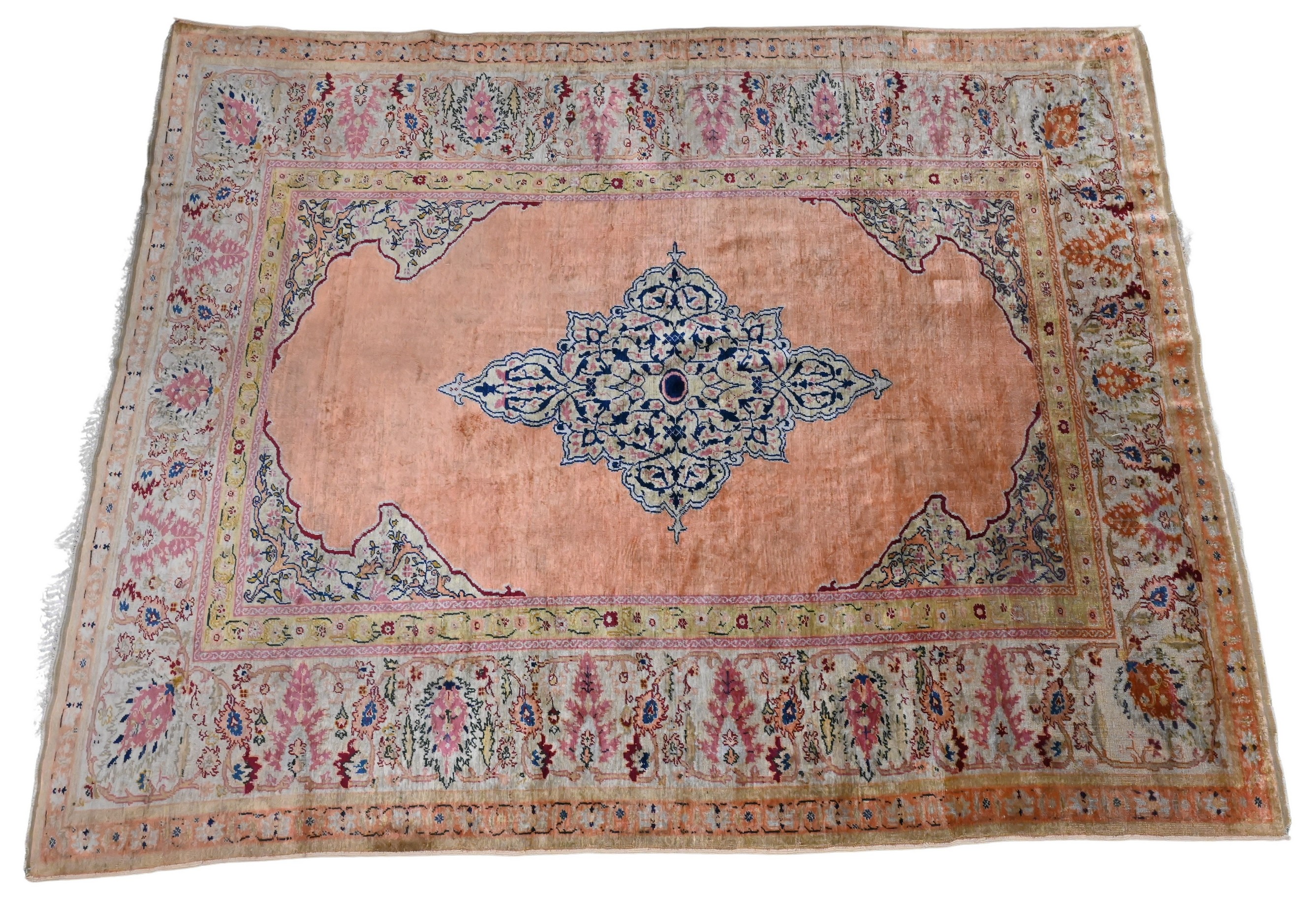
Persian Silk Throw Rug
finely woven silk rug with a central stepped medallion in ivory, terracotta, and black, surrounded by intricate geometric and floral devices, the field and borders display crisp detail characteristic of silk weaving, with a luminous sheen and excellent color saturation
3’8″ x 5’8″
Provenance: Estate of Nina Silberstein, former CEO of David Webb
Large Oushak Carpet, Western Anatolia, C. 1890
magnificent room-size Oushak carpet featuring a soft gray field enlivened with bold terracotta, apricot, and saffron motifs, the field displays the classic Oushak vocabulary of oversized palmettes, stylized leaves, and linked medallions arranged in an open, generously spaced layout, framed by an ivory border with scrolling floral elements, the palette is warm, decorative, and highly versatile—ideal for both traditional and modern interiors, wool
Size: 14′ 6″ x 20″
Provenance: A Collection from a New York City Townhouse Built by Stanford White, Interior Designed by Cullman and Kravis
Beauvais Carpets, July 3, 2008 (purchase price: $175,000).
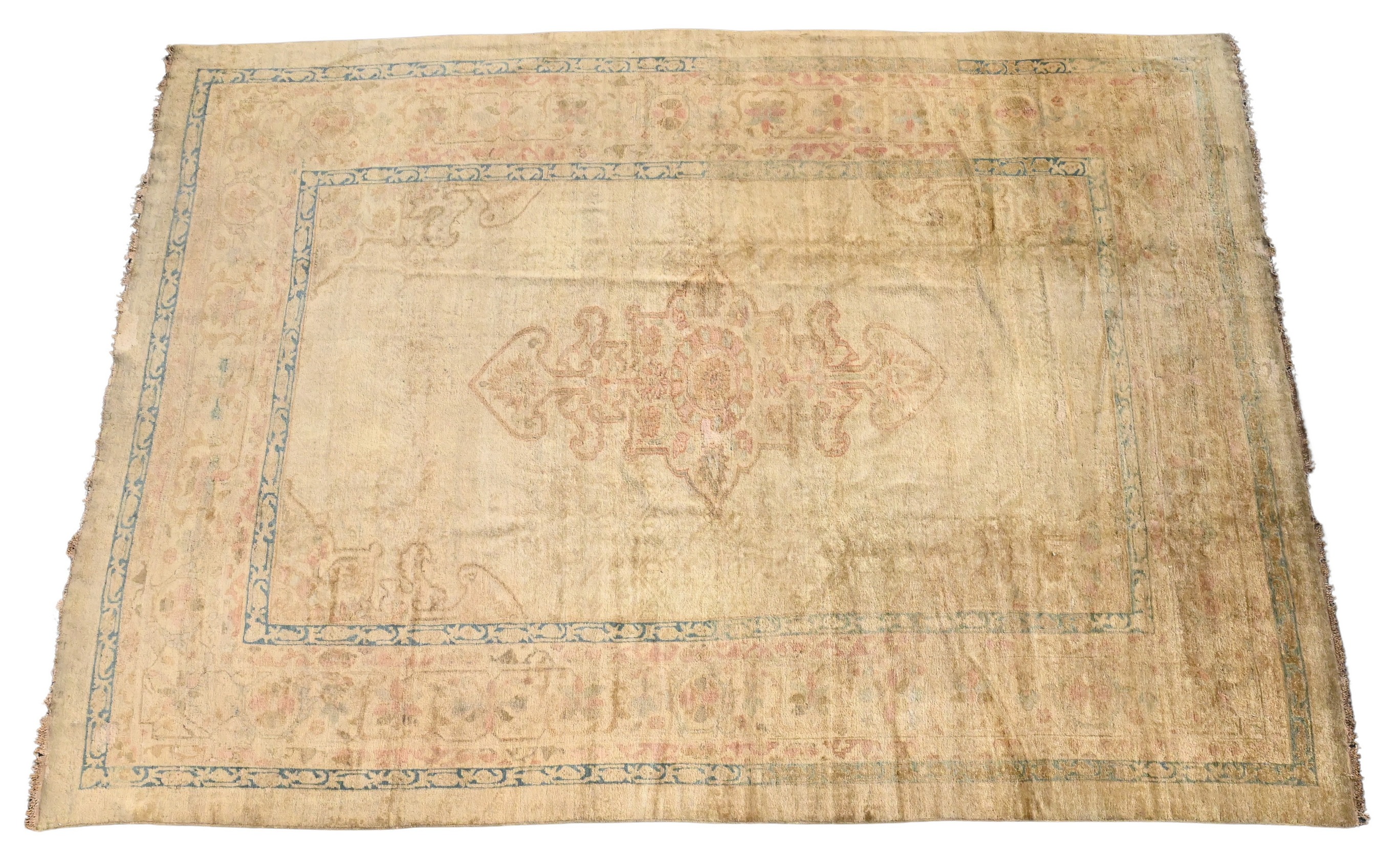
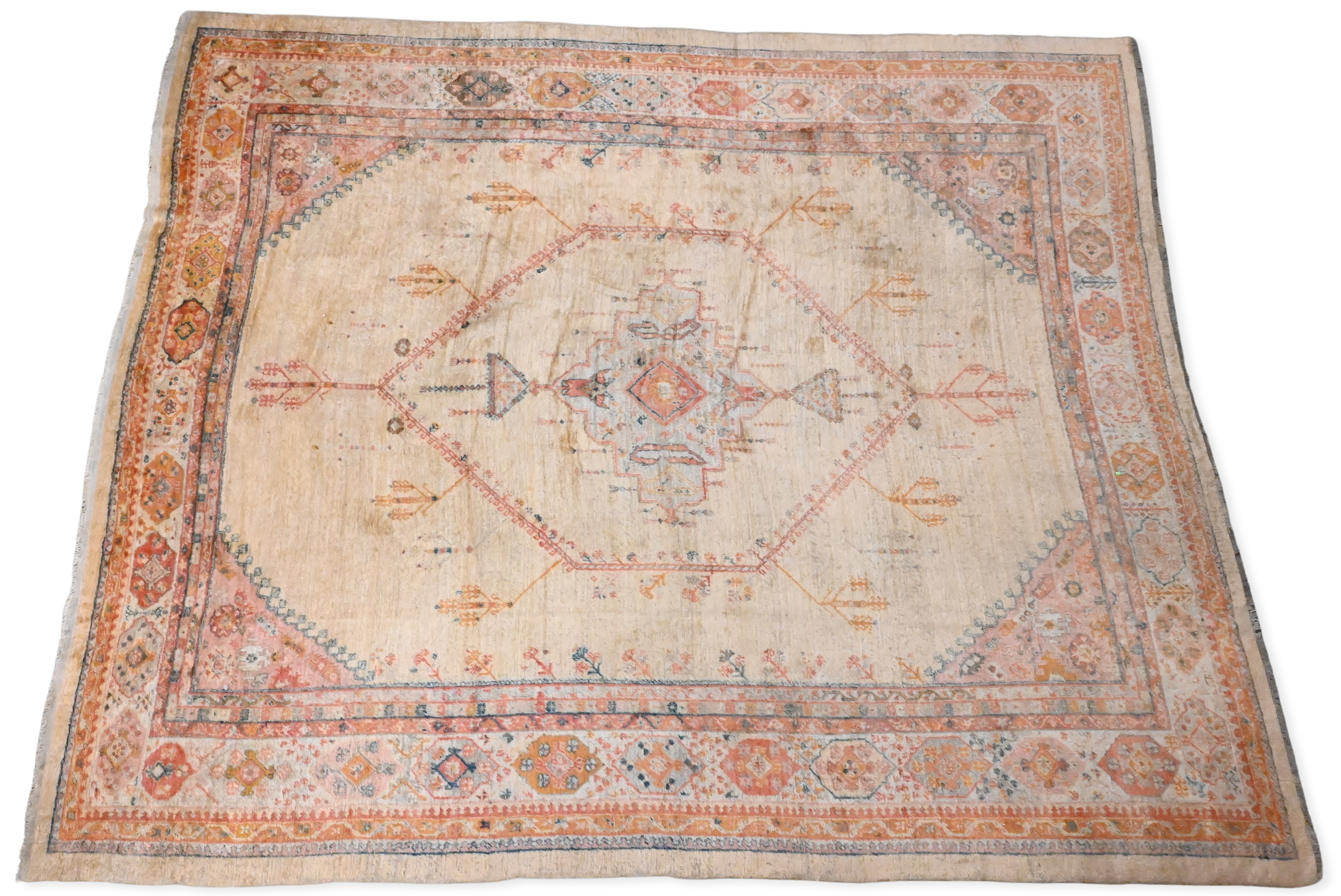
Oushak Carpet, Western Anatolia
large Oushak carpet woven with an open soft gold field centered by a stylized medallion, with muted rose and pale blue accents. The wide borders are filled with muted floral motifs framed by blue surrounds, late 19th century
Approximately 12′ x 16′ 8″
Provenance: Collection of Barbara Rothschild Michaels and Roger Michaels of New York City and Ossining, New York; many items passed through the family from the Estate of Herbert and Nannette Rothschild
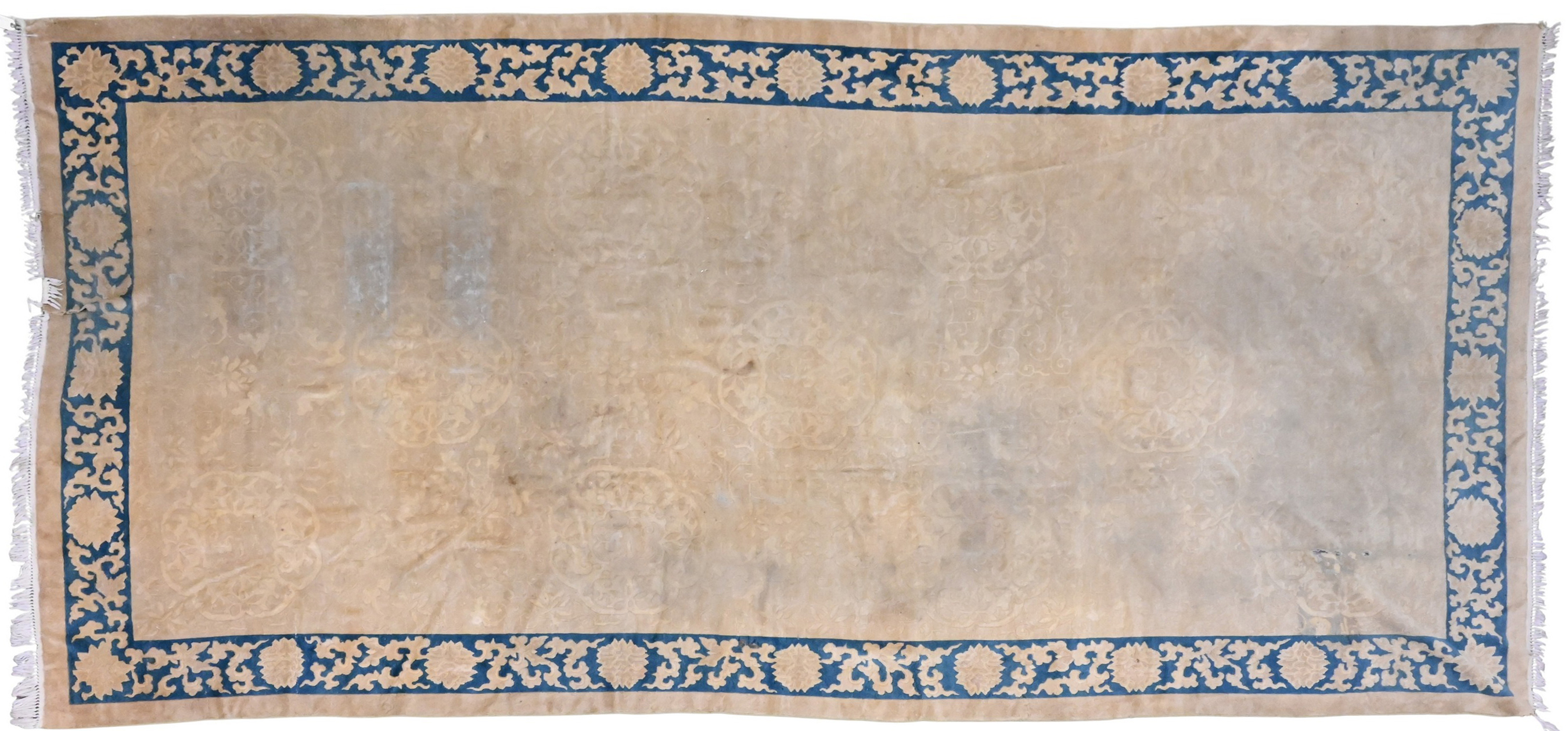
Chinese Peking-Style Hall Runner
A Chinese Peking-style room-size carpet, woven with a soft oatmeal-beige field displaying subtle tonal floral and scrolling medallion motifs. Framed by a contrasting indigo-blue border with large stylized lotus blossoms and meandering foliate elements. Dense wool pile on a cotton foundation.
8′ x 15′
Provenance: Estate of Nina Silberstein, former CEO of David Webb
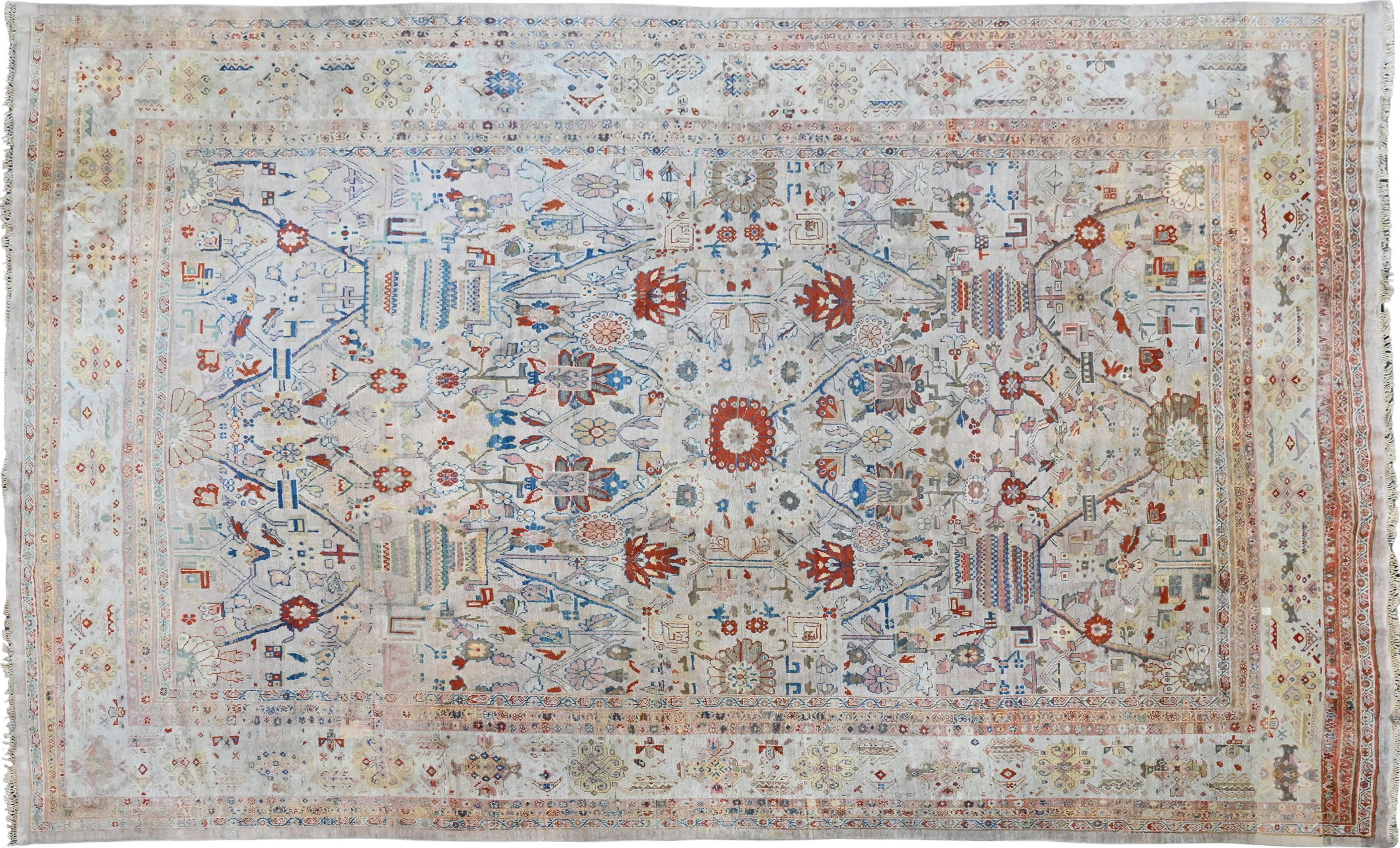
Persian Sultanabad Carpet
central Persian design featuring large vases issuing stylized flowers and leaf forms on a beige field with accents of rust, blue, and ivory, framed by very large borders of rosettes and scrolling vines, the design is finely drawn and well-balanced, wool pile on cotton foundation, 19th Century
14′ 6″ x 19′ 7″
Provenance: Property from a Private Collection at 791 Park Avenue Designed by Cullman & Kravis, Inc
Dildarian, Inc., 595 Madison Avenue, New York, February 2, 1989, purchase price $80,000
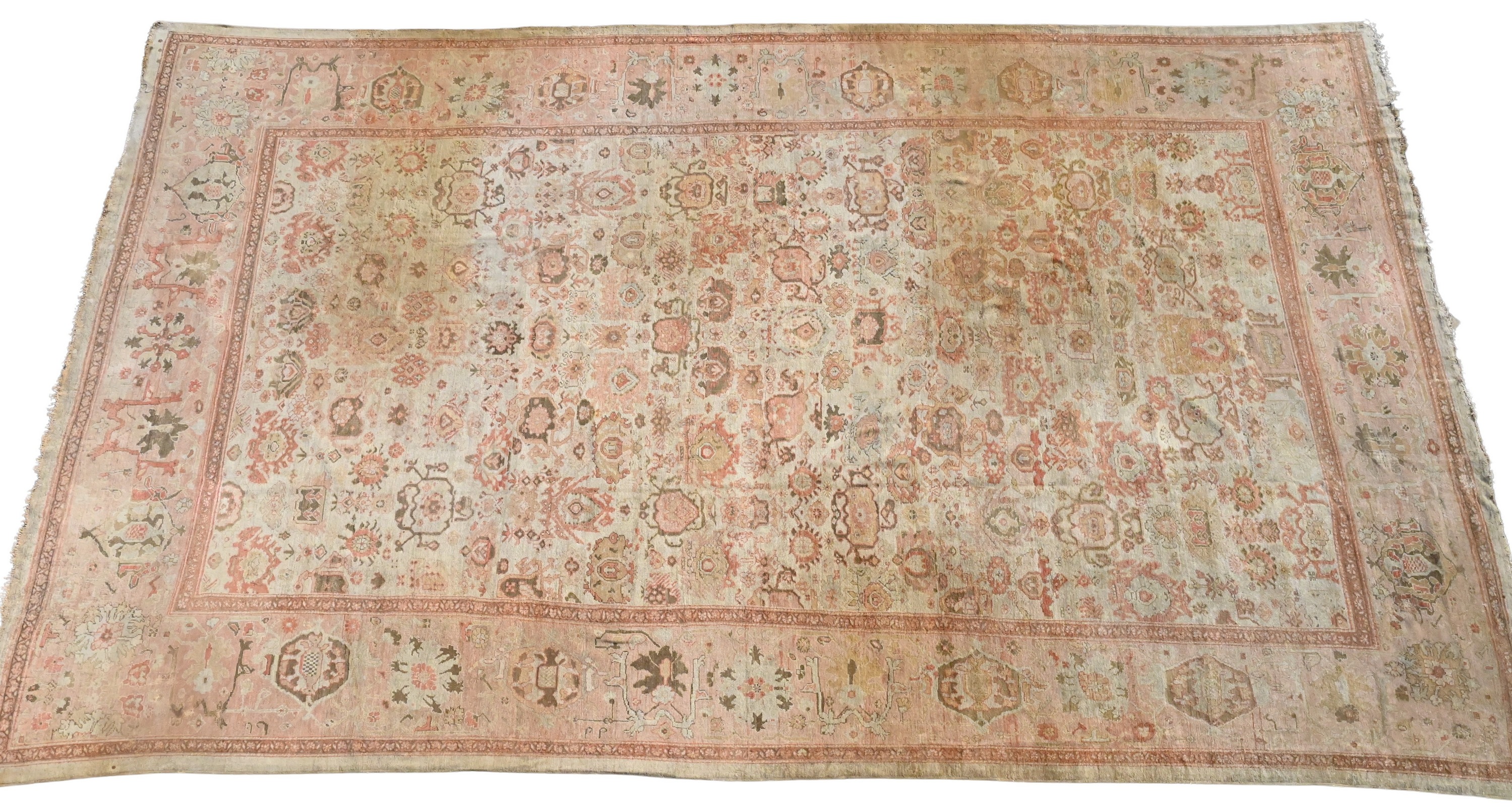
Oushak Carpet, Western Anatolia, Late 19th Century
beige field enriched with gold, brick, brown, gray, and salmon tones, displaying the classic Oushak vocabulary of large palmettes, stylized floral motifs, and geometric devices, framed by an extremely wide salmon-colored border with boldly rendered floral elements, substantial, room-size example retaining a beautifully varied, time-softened palette
13′ x 21′ 8″
Provenance: Collection of Barbara Rothschild Michaels and Roger Michaels of New York City and Ossining, New York; many items passed through the family from the Estate of Herbert and Nannette Rothschild
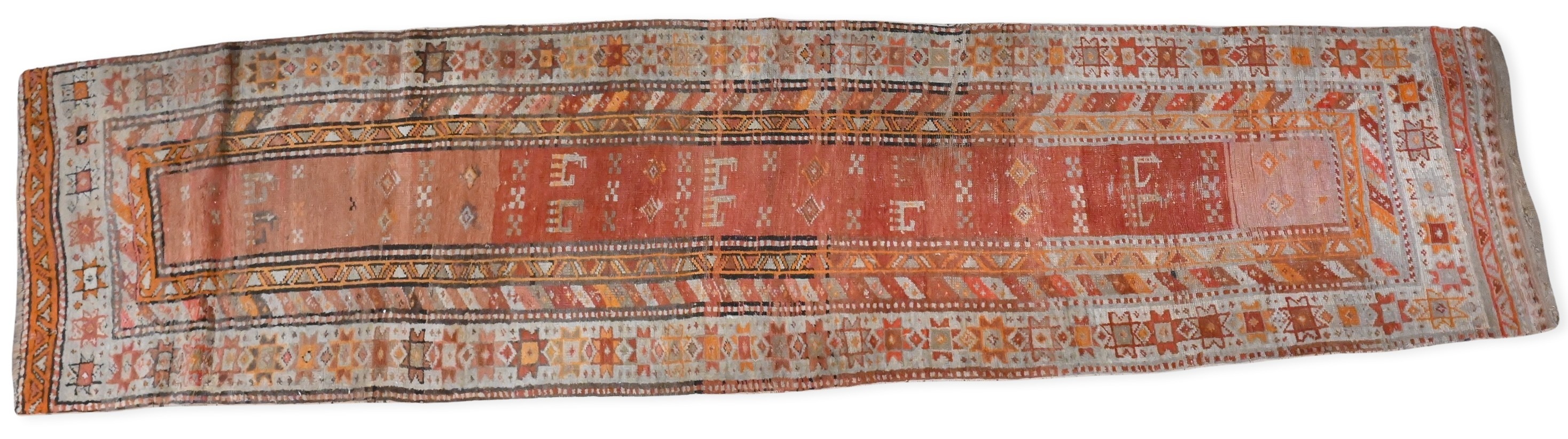
Turkish Anatolian Long Rug Runner
warm terracotta field displaying stylized animals, geometric devices, and latch-hook motifs, framed by multiple stepped and star-pattern borders in soft gold, cream, and rust tones, woven with a narrow central panel and elongated proportions typical of village production
2’8″ x 10’9″
Provenance: Collection of Barbara Rothschild Michaels and Roger Michaels of New York City and Ossining, New York; many items passed through the family from the Estate of Herbert and Nannette Rothschild
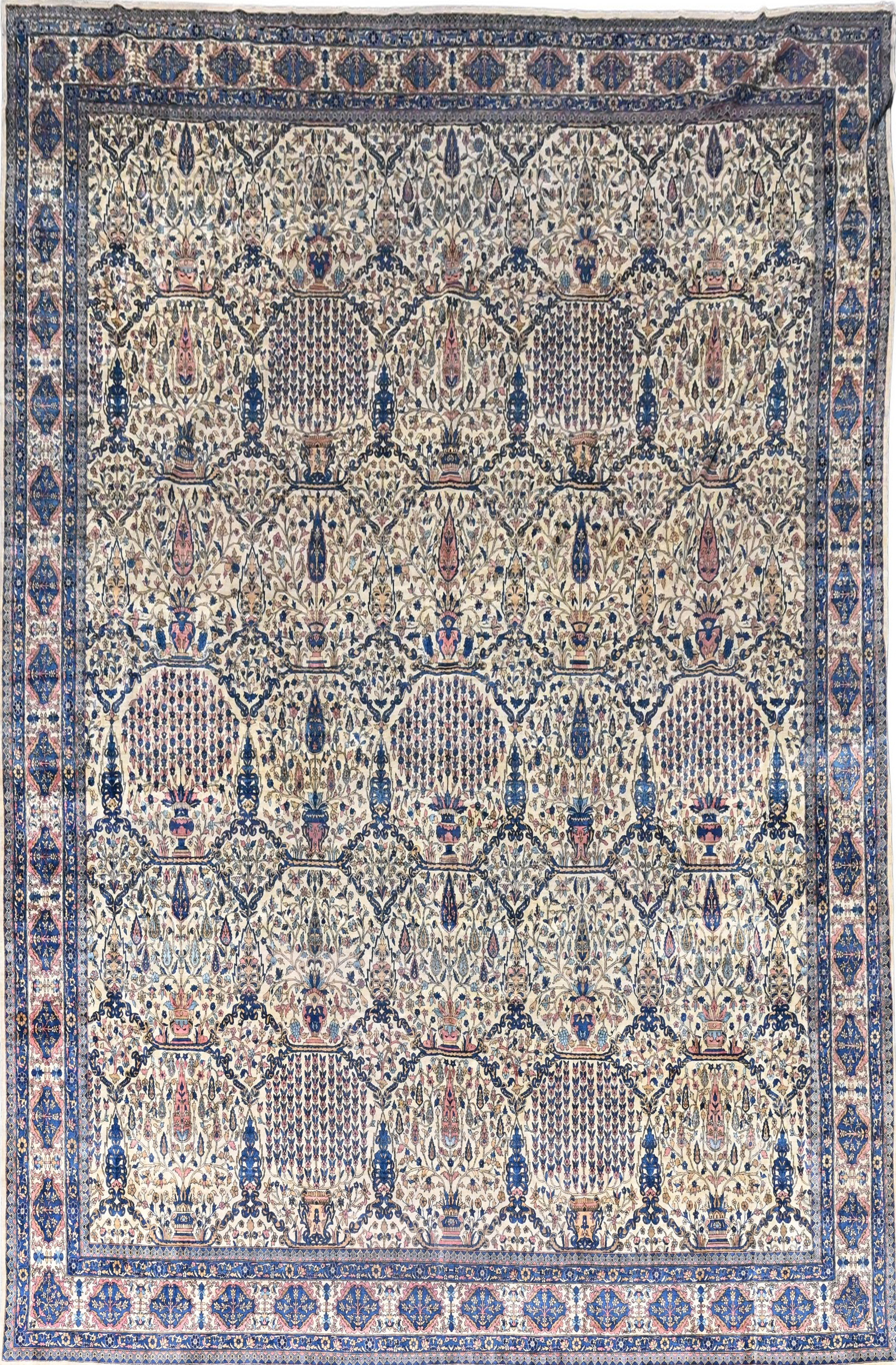
Persian Lavar Kerman Carpet
finely woven central Persian design featuring large vases issuing floral sprays, pomegranate trees, and cypress motifs on an ivory field accented with deep blue, rose, and tan, enclosed by multiple broad borders of palmettes and scrolling vines, circa 1900
16′ 4″ x 18′ 6″
Persian Mahal Carpet
central Persian design of large stylized palmettes, vinery, and floral sprays in soft light blue, tan, and rust tones on a beige field, enclosed by a dark tan border with scrolling vines and floral motifs, late 19th century
13′ 6″ x 15′ 4″
Provenance: Collection of Barbara Rothschild Michaels and Roger Michaels of New York City and Ossining, New York; many items passed through the family from the Estate of Herbert and Nannette Rothschild
Cullman & Kravis, September 17, 2008, purchase price $75,000
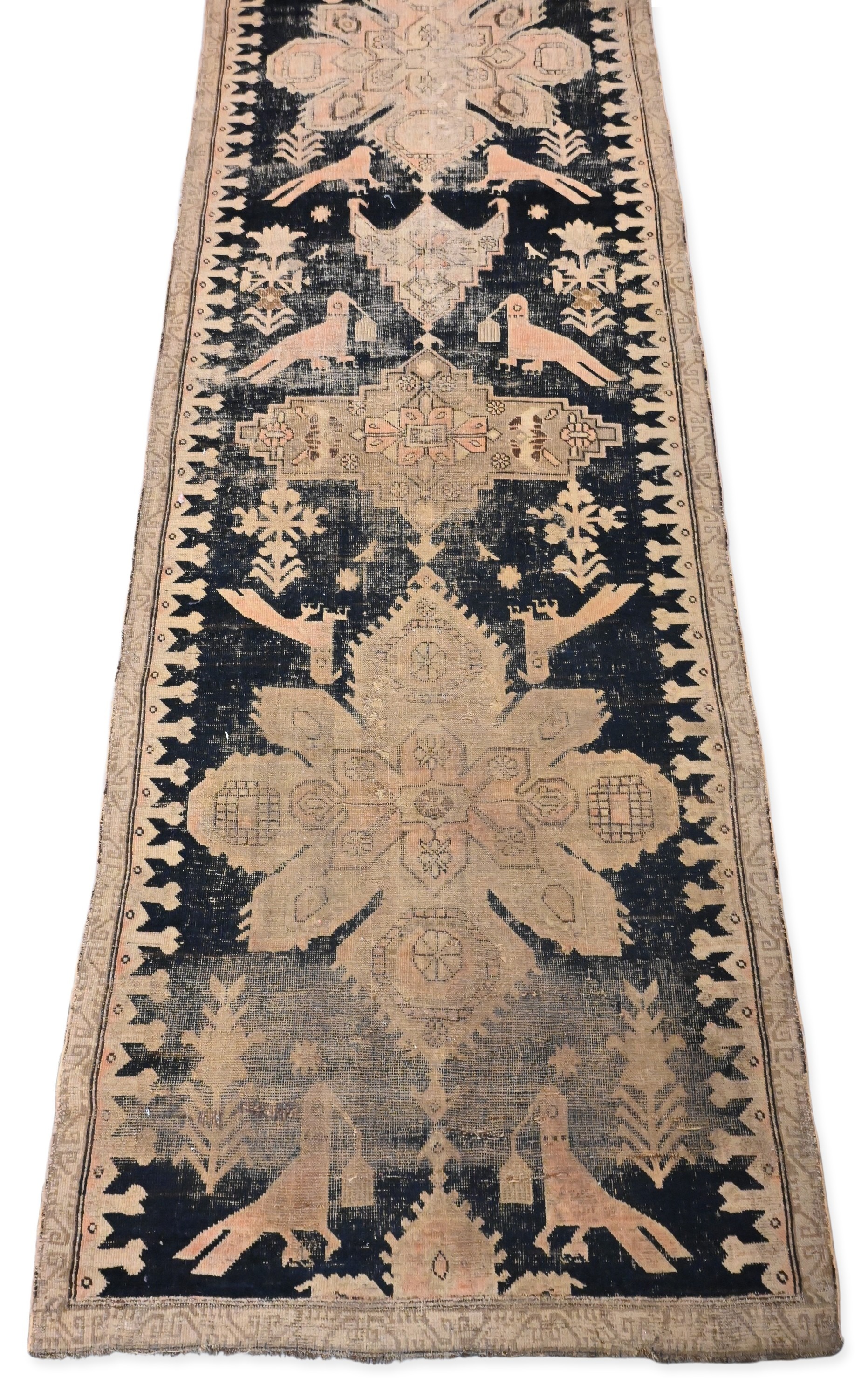
Caucasian Runner, 18th/19th Century
With a dark brown to near-black field centering bold ivory geometric medallions flanked by stylized birds, trees, and latch-hook motifs, all within a reciprocal border. Reduced in length from a larger runner, showing wear and visible repairs but retaining strong design and character.
3′ x 14’6
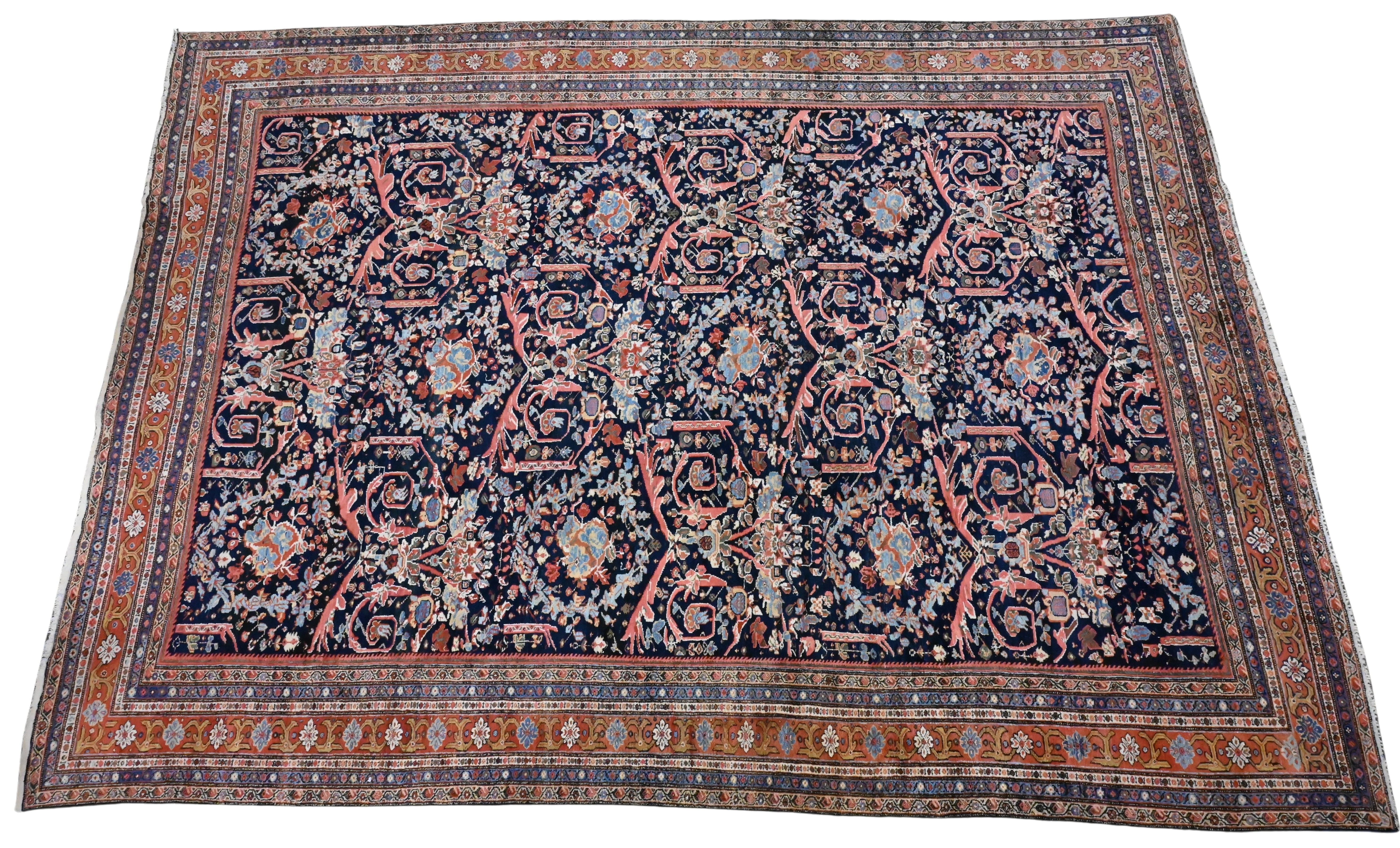
Persian Mahal Carpet, Early 20th Century
having a navy field with stylized palmettes, vines, and floral motifs in shades of rust, light blue, ivory, and gold, within a rust and ivory palmette border, fine weave and classic Mahal palette
approximately 12′ 3″ x 16′ 9″
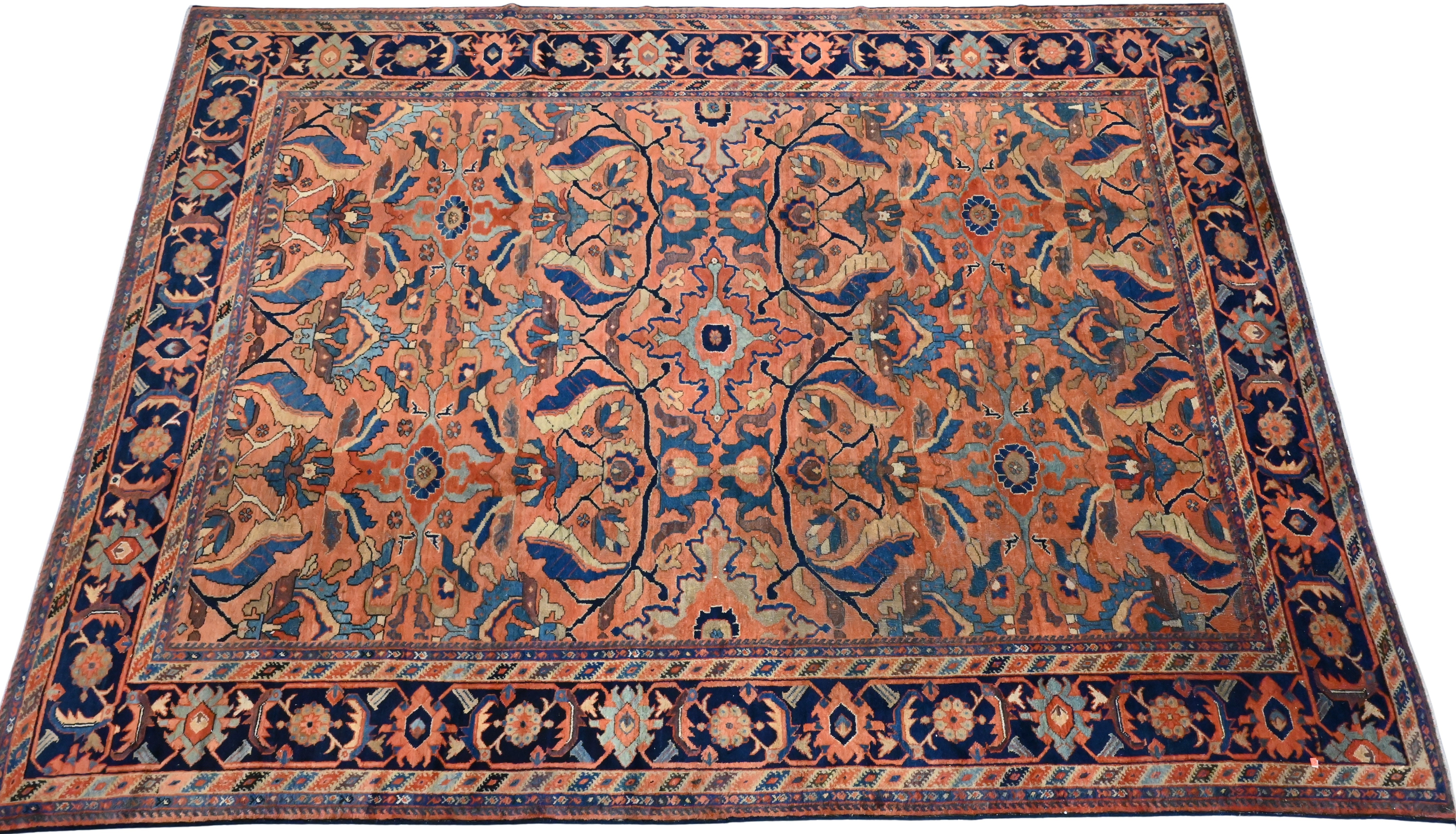
Persian Mahal Carpet, 19th Century
A room-size Persian Heriz carpet, displaying the classic bold geometric medallion design in a palette of madder red, deep indigo, ivory, and soft blues. The field is filled with stylized florals and angular vinework, framed by a wide indigo border with rosettes and serrated leaves
9’5” x 13’
Persian Sultanabad (Mahal) Carpet
having all over repeating floral and palmette design in muted rust, blue, and ivory tones within multiple floral borders, late 19th century
12′ 6″ x 15′ 7″
Angora Oushak Carpet
room-size Oushak carpet with a soft ivory field decorated with open geometric medallions and stylized leafy motifs in muted terracotta, apricot, and celadon tones, framed by multiple borders incorporating floral and geometric elements in the traditional Oushak palette, early 20th Century
12′ x 14′ 4″
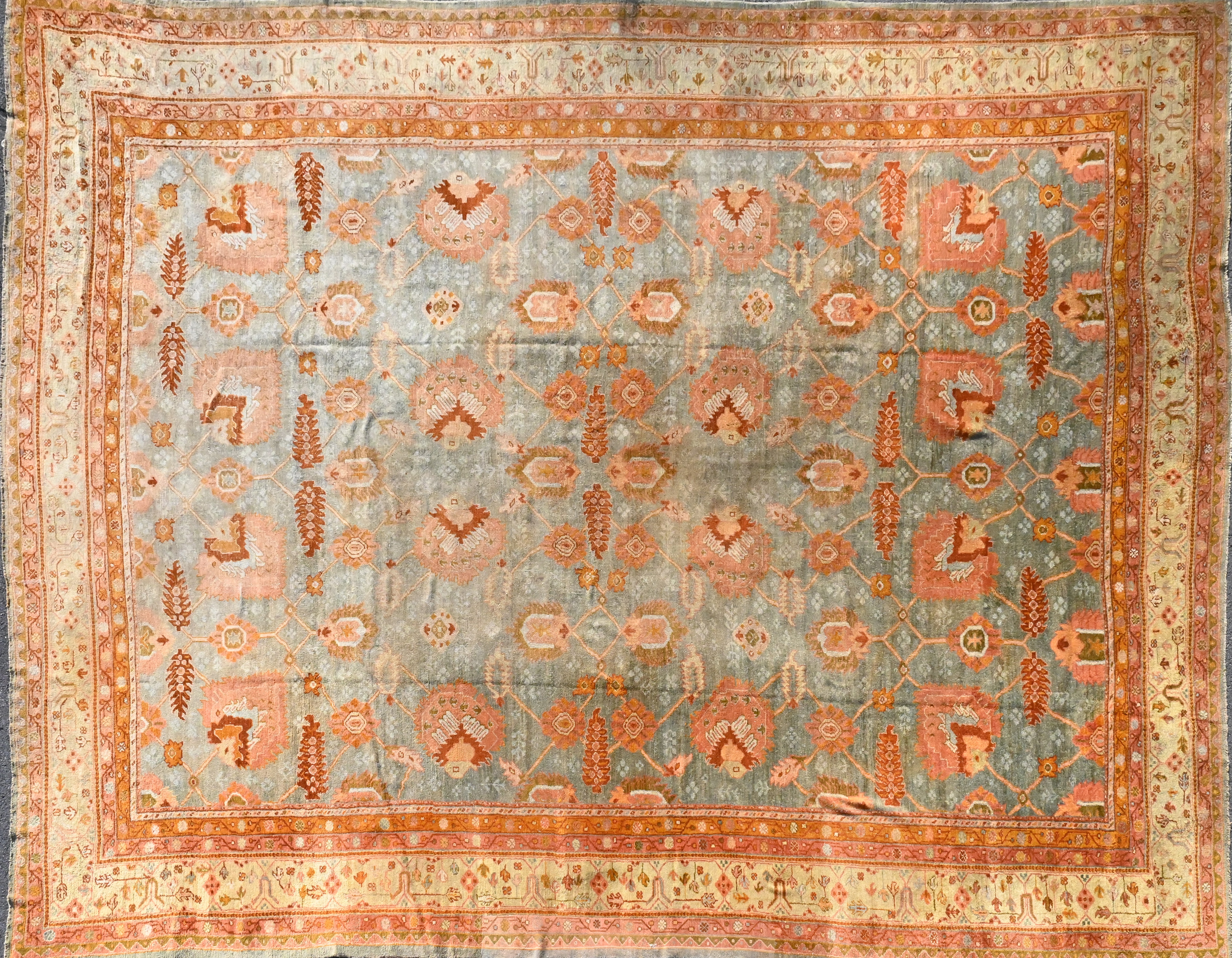
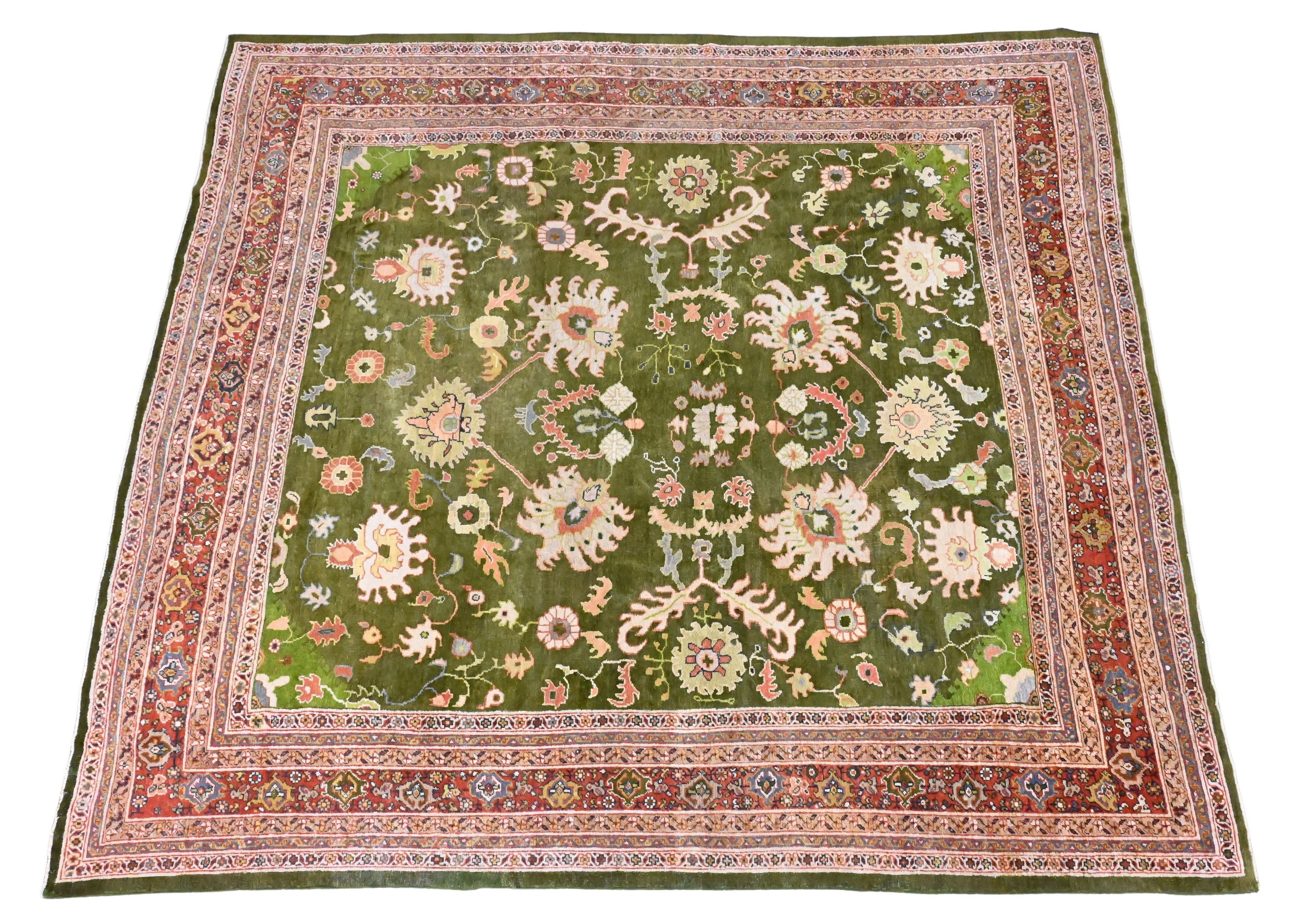
Oushak Carpet
featuring an unusual and finely drawn example with large stylized palmettes and leafy tendrils on a rare green field with accents of ivory, rust, and pale blue, framed by multiple borders of rosettes and scrolling vines, 19th century
10′ x 11′ 3″
Provenance: A Collection from a New York City Townhouse Built by Stanford White, Interior Designed by Cullman and Kravis
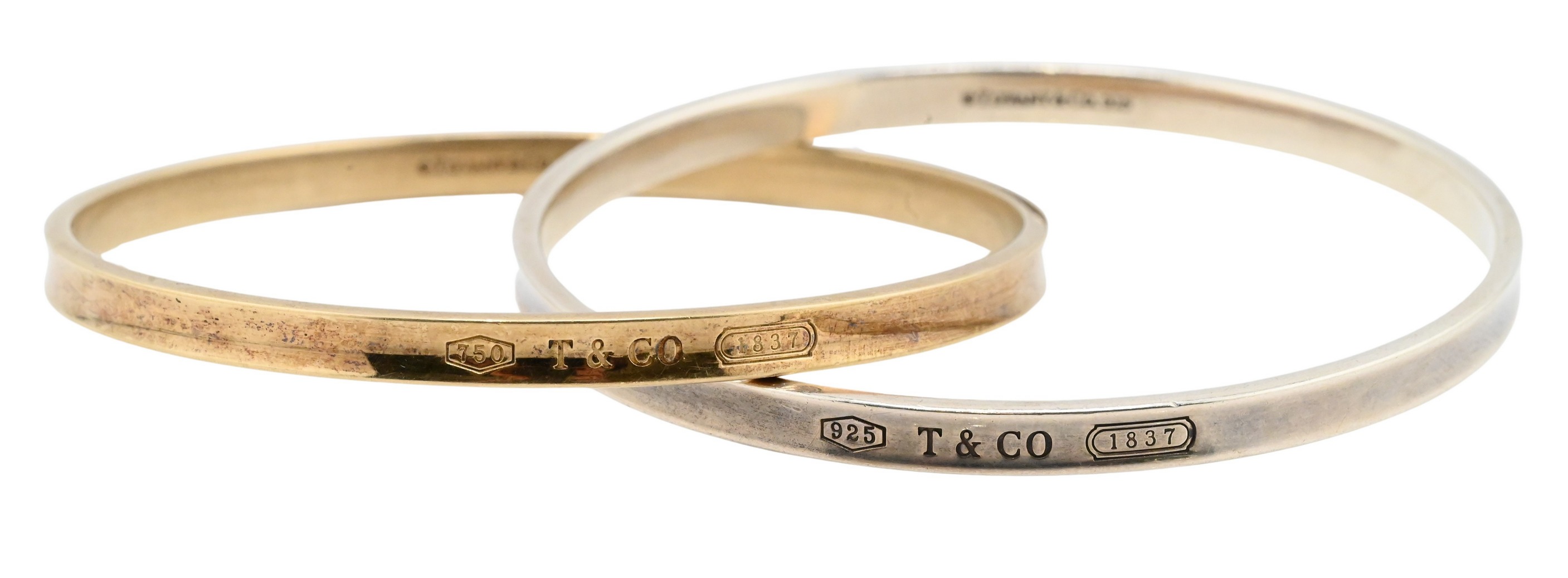
Tiffany & Co. 18K Gold and Sterling Silver ‘1837’ Interlocking Bangles
Comprising one 18K yellow gold bangle and one sterling silver .925 bangle, each marked T & CO 1837, designed to be worn interlocked, the gold bangle weighing 31.89 grams, the sterling silver bangle weighing approximately 0.6 troy ounces (20.6 grams), outer circumference approximately 9¼ inches, along with Tiffany and Co. felt pouch
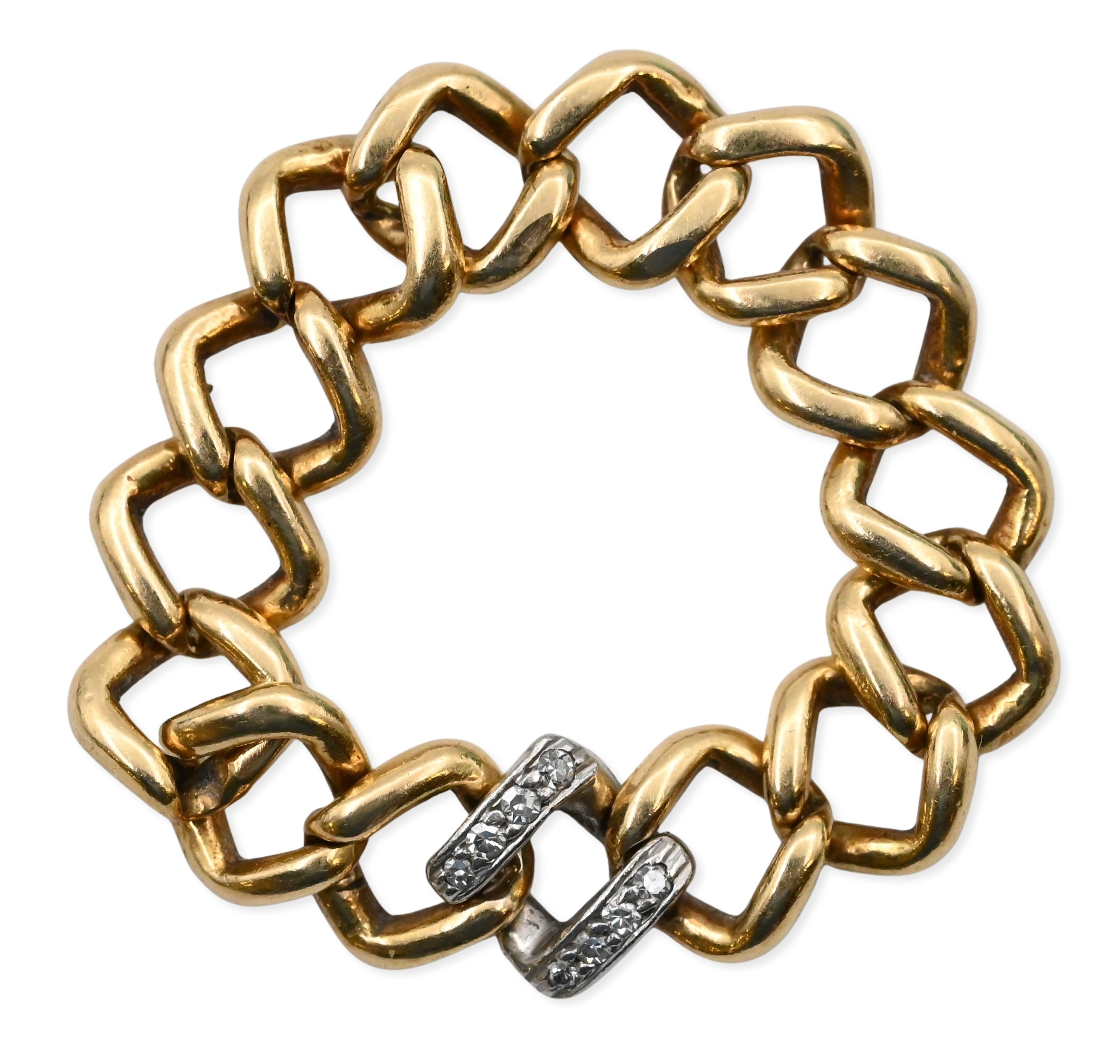
18K Gold and Diamond Chain-Link Ring
featuring an interlocking chain-link design crafted in polished yellow gold, with one white gold link pavé-set with small round diamonds for added brilliance
ring size 9¾, total weight 4.7 grams
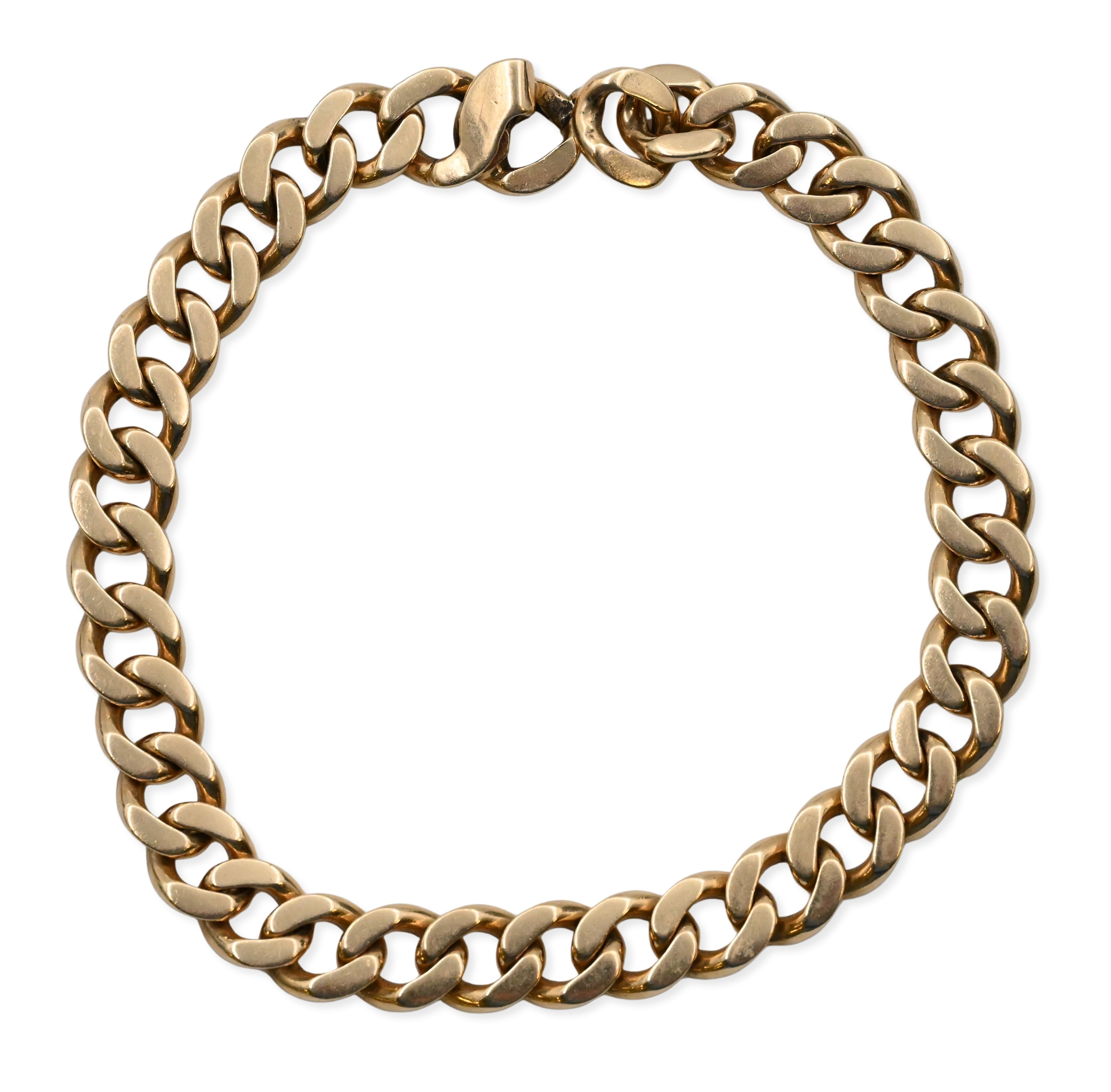
Tiffany & Co. 14K Gold Curb-Link Bracelet
classic polished curb-link bracelet in 14K yellow gold, fitted with an integrated end link stamped “Tiffany & Co.” and “14K.”, includes original Tiffany & Co. presentation pouch and box
length 8¾ inches, total weight 31.0 grams
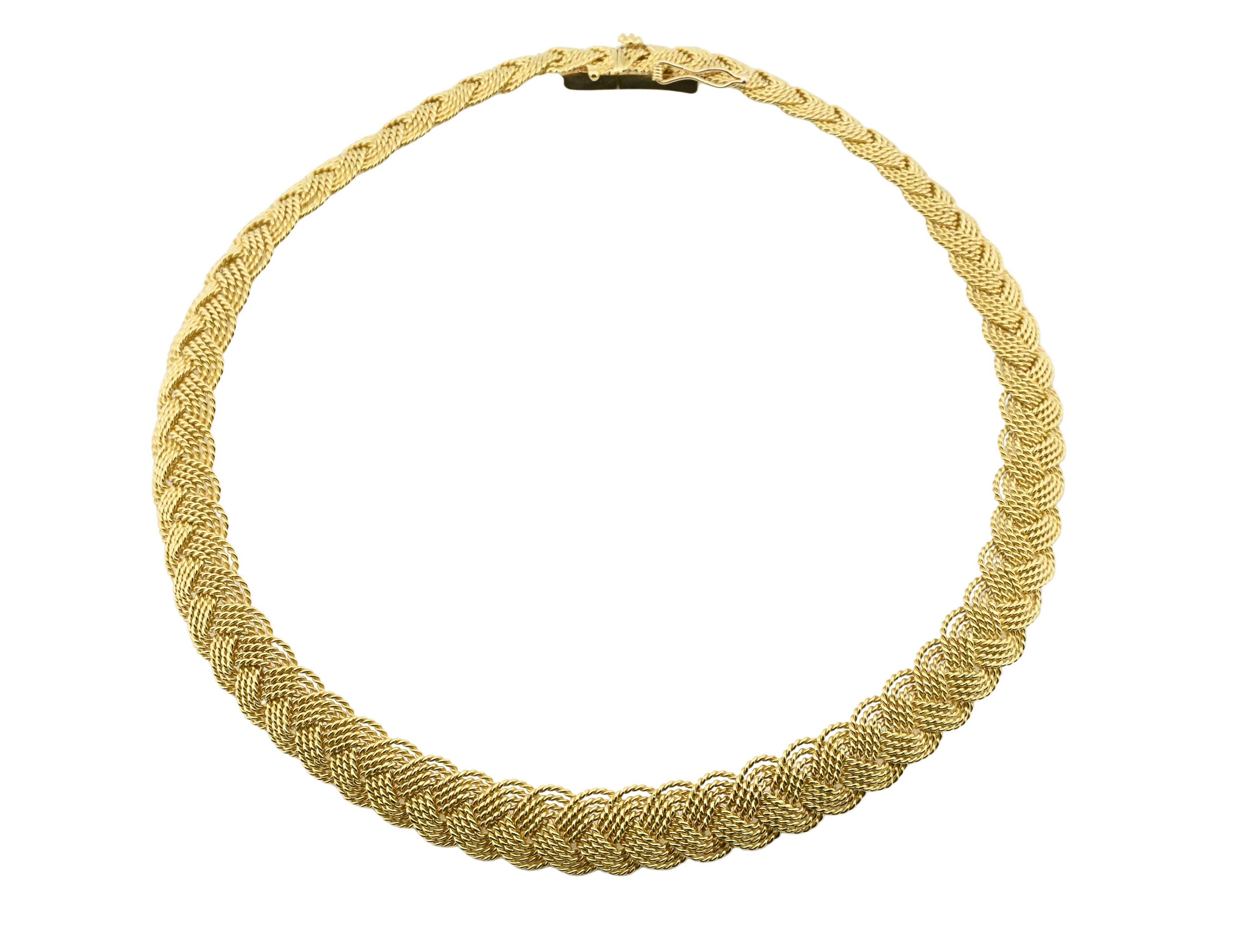
18K Yellow Gold Necklace of Rope-twist Braided Design
signed Aga, total weight 89.6 grams
Provenance: Property from The Estate of Sally G. Chubb of Bernardsville, New Jersey
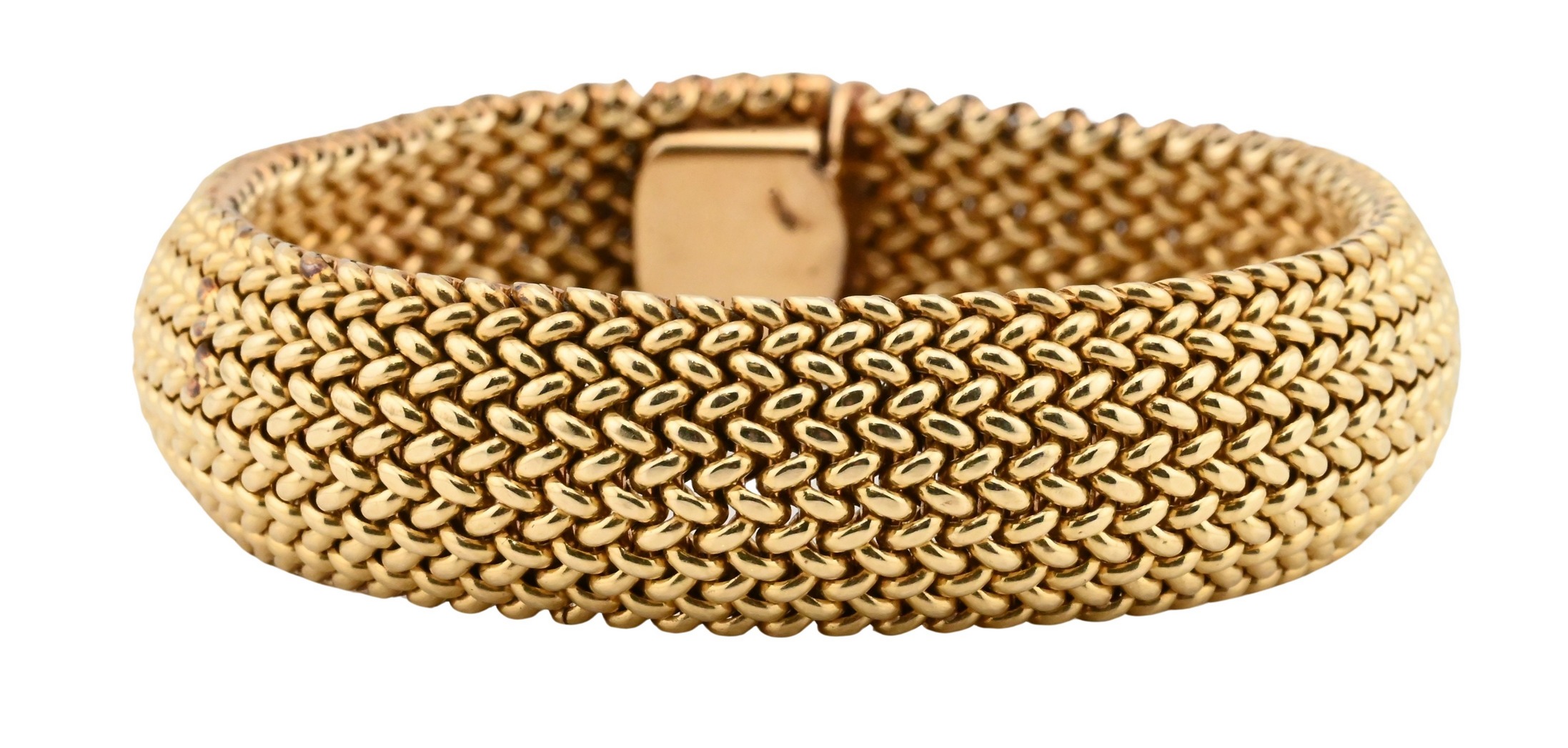
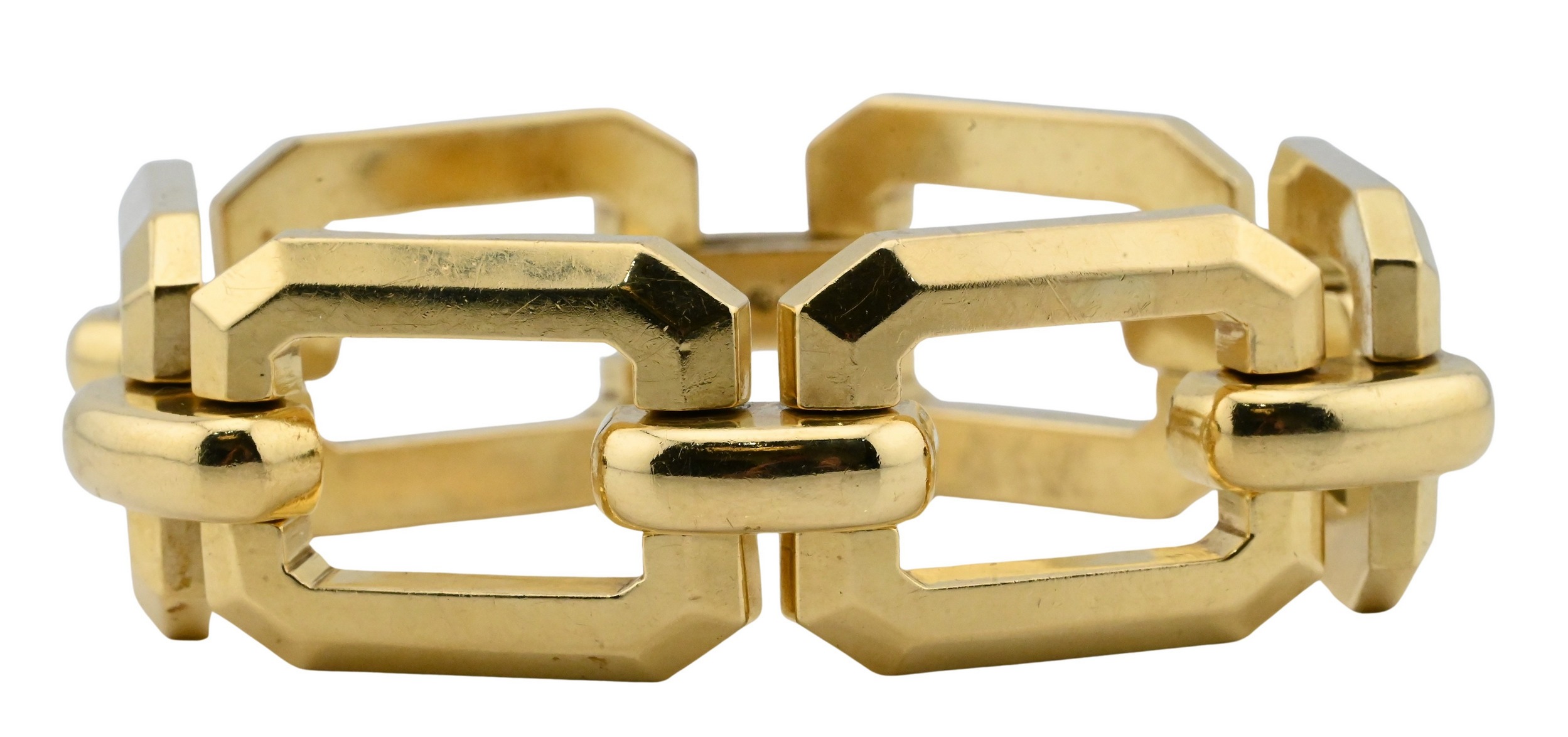
Heavy 18K Yellow Gold Bracelet
composed of bold open rectangular links joined by solid connectors, stamped with maker’s mark and hallmark
length approximately 7 1/2 inches, total weight 51.67 grams
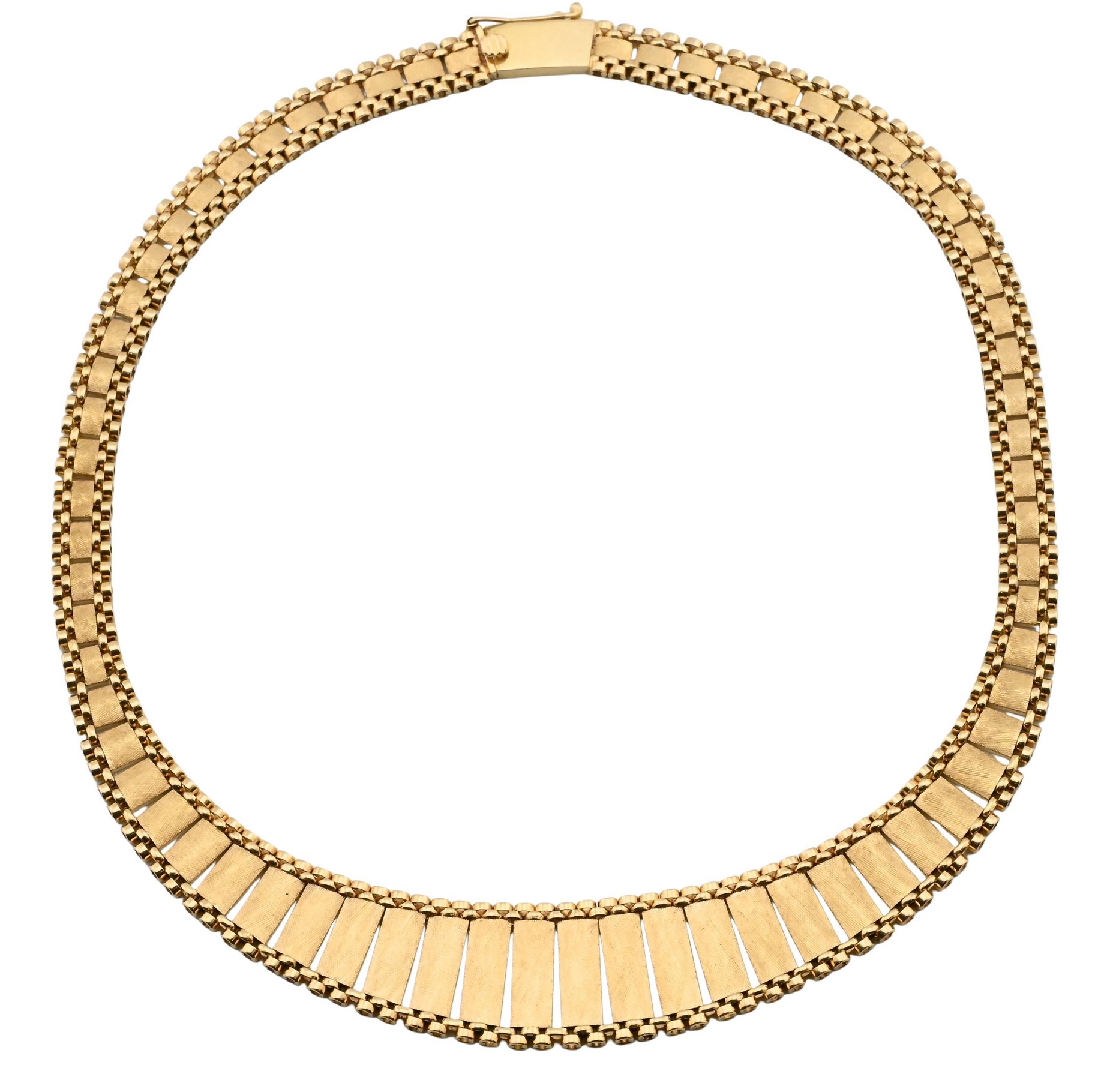
14K Yellow Gold Necklace Composed of Tapering Brushed and Bordered Links
length 15 1/2 inches, total weight 39.2 grams
Provenance: Property from The Estate of Sally G. Chubb of Bernardsville, New Jersey
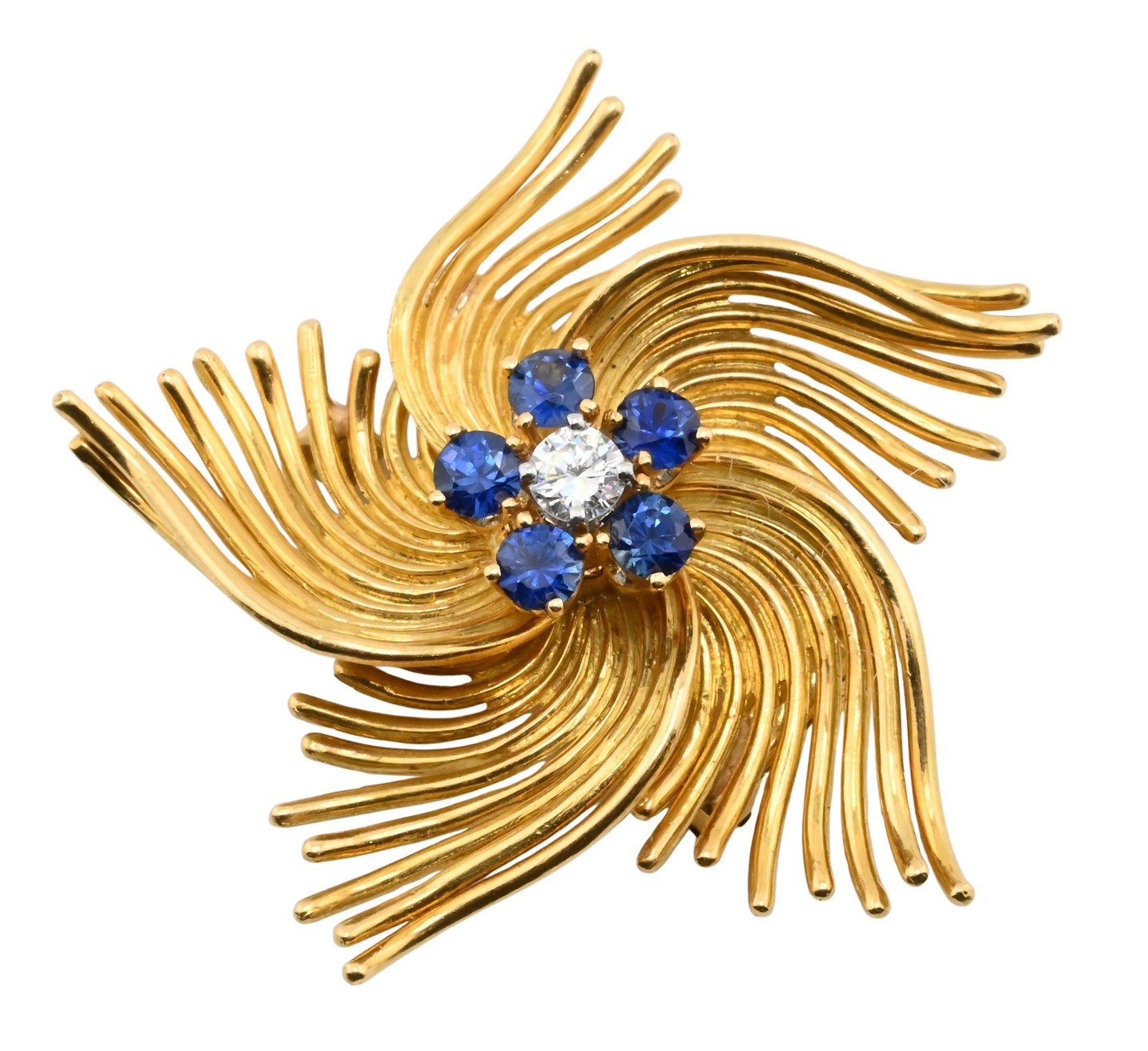
18K Yellow Gold Stylized Flower Brooch of Curved Sprays Centering One Round Brilliant-cut Diamond
weighing approximately 0.25 carats surrounded by five round sapphires, stamped with maker’s mark
diameter 1 1/2 inches, total weight 14.3 grams
Provenance: Property from The Estate of Sally G. Chubb of Bernardsville, New Jersey
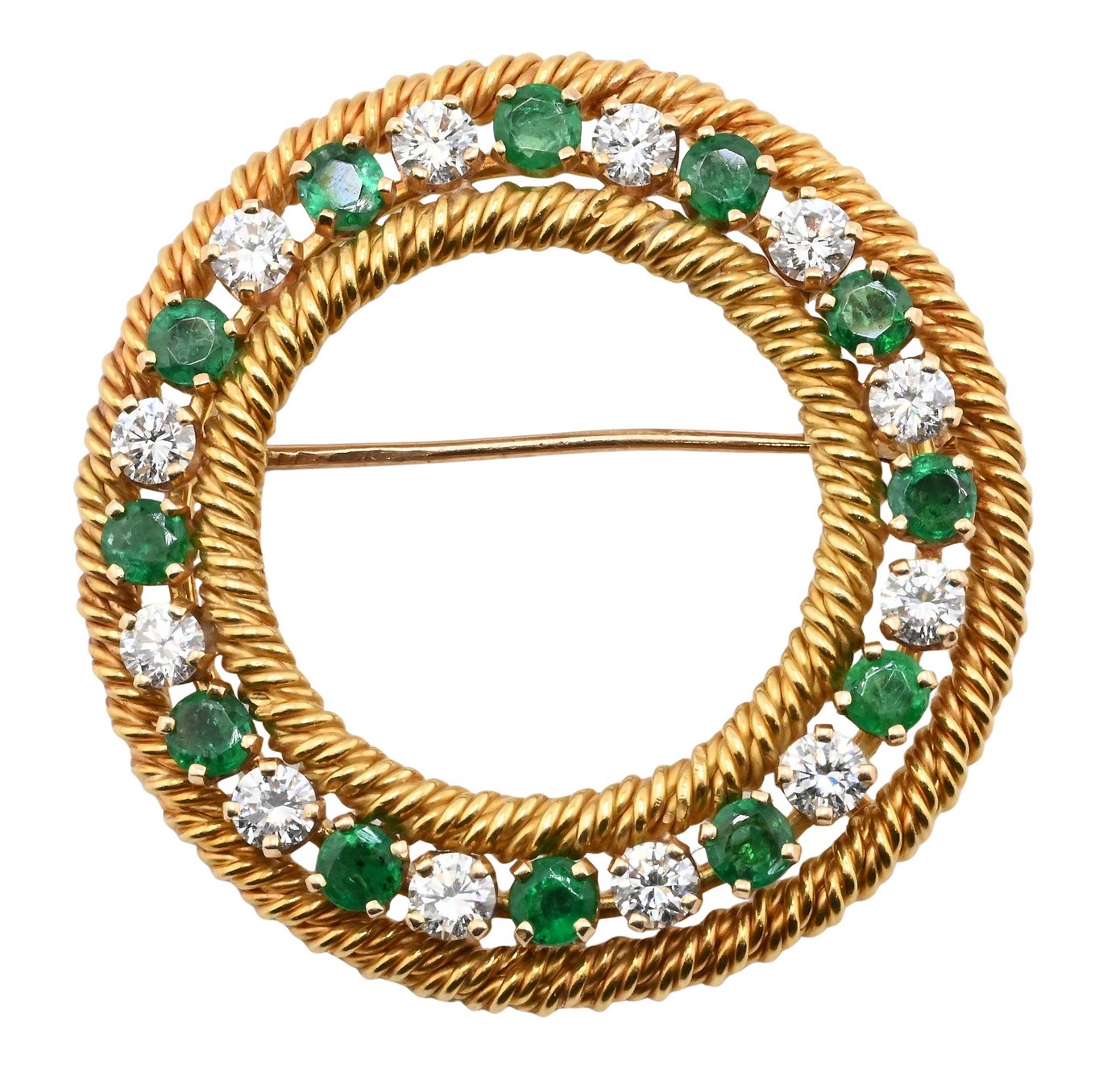
18K Yellow Gold Circular Brooch Designed with Rope-twist Borders
centering a line of alternating twelve round brilliant-cut diamonds totaling approximately 1.75 carats and twelve round emeralds, marked with maker’s signature
diameter 1 1/2 inches, total weight 14.7 grams
Provenance: Property from The Estate of Sally G. Chubb of Bernardsville, New Jersey
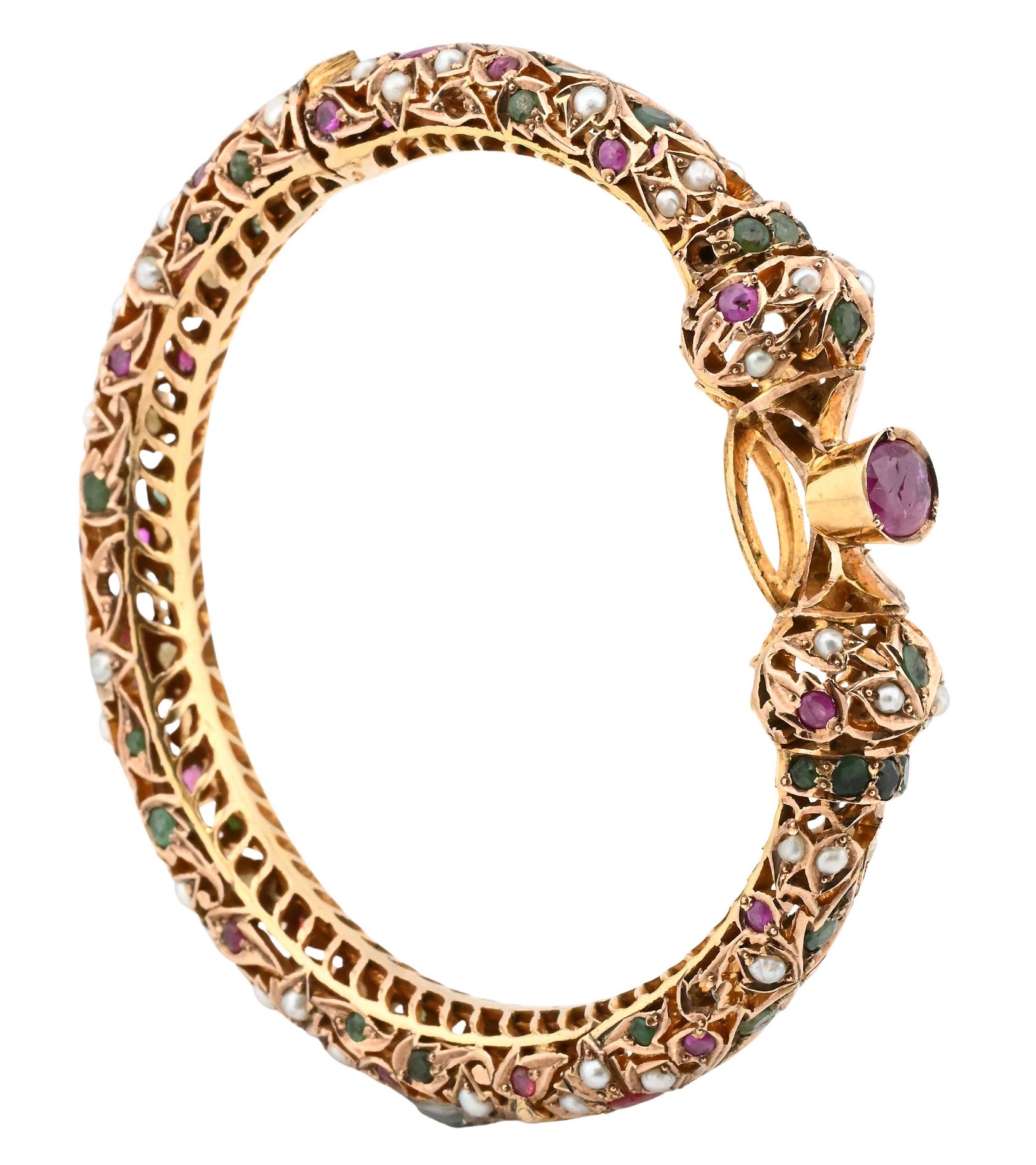
14K Gold Gem-Set Hinged Bangle
the pierced foliate frame bead-set throughout with seed pearls, emeralds, and rubies, centering an oval cabochon ruby measuring approximately 5.9 × 6.9 mm hinged opening with concealed clasp
diameter 3¼ inches, total weight 40.5 grams